
You want your road trip to feel simple, but real life gets in the way. Glare and night driving can make video useless, storage can fill up right when you need it, and parking features can drain your battery if you set them up wrong. Add busy highways, unfamiliar roads, and the stress of sorting out what happened after a close call, and it is easy to feel unsure about what to buy and how to use it.
Picking the best dash cams for family road trips is mostly about matching your needs to the right features, then installing and maintaining it so it works when it matters. If you are starting from scratch, a car dash cam can be a practical way to record the trip and reduce uncertainty.
How Dash Cam Brands Differ
A dash cam is not just a small camera that records the road. Modern models vary in the number of cameras they support, how they handle parking monitoring, and whether they offer add-ons such as a GPS logging module or an in-car camera.
One example is Vantrue, which states that it has focused on dash cams since 2015 and has built models that cover everyday driving and vehicle security use cases. That context matters because it helps you compare features on neutral terms and decide what actually fits your car dash cam needs.
Why Families Use Dash Cams
Capture Hidden Moments
Your phone is not always ready when the good moments happen. A dash cam records quietly while you drive, so you can catch the scenic stretch you did not expect, your child pointing out a landmark, or the small details you forget later. For family travel, the goal is not to film continuously. It has reliable footage you can access whenever you need it.
Get Crash Context
Road trips often involve long hours, heavy traffic, and unfamiliar drivers. If something goes wrong, video can give you context you might miss in the moment, such as which lane you were in, whether a light changed, or how close another car was. Even in minor incidents, a car dash cam can reduce arguments by preserving what happened without relying on memory.
Recording Features to Prioritize
Clear Video in Any Light
Travel conditions change fast. You might drive into a tunnel, hit rain at dusk, or deal with headlight glare at night. Focus on stable clarity, not just the biggest number on the box.
- Resolution helps, but low-light performance depends on the sensor and processing as much as the pixel count.
- Wide-angle lenses can improve coverage, but extreme wide angles may distort the edges and make distant details harder to read.
- A CPL filter can cut windshield reflections and dashboard glare, especially when the sun is low or your dash is bright.
Choose the Right Angles
Angle coverage is one of the most practical decisions you will make.
- Front-only coverage is simplest and can still capture most driving events.
- A front-and-rear dash cam (often called a dual dash cam) helps address tailgating and rear-end impacts.
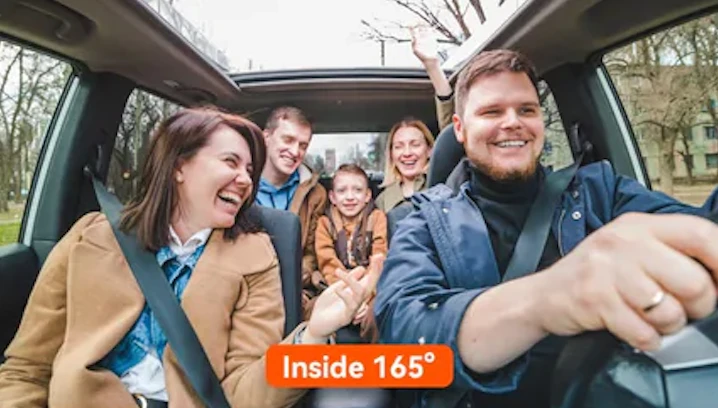
- A 3-channel dash cam adds an in-car camera, which can be useful if you want a record of what happened inside the vehicle, such as distractions, sudden movements, or interactions during a stop.
As a neutral example of a multi-angle setup, the Vantrue OnDash N4 is a 3-channel model that records the front, cabin, and rear. It is also worth noting that this model is listed as not having Wi-Fi, which is a reminder to check convenience features like app transfer before you buy.
Use Audio and Time-Lapse
Audio can make travel clips feel more real, but you should treat it carefully. If you record audio, you should set expectations with passengers first, especially with older kids or friends.
For storytelling, time-lapse can turn hours of highway into a short highlight. For safety, time-lapse parking can help you monitor a long stop with smaller files. If your camera supports time-lapse, confirm whether it records audio in that mode, as many models do not.
Storage for Long Drives
Know Loop Recording
Most dash cams use loop recording, which means the camera records continuously and overwrites the oldest files once the card is full. That is ideal for travel because you do not have to constantly manage files. Please confirm that your settings match your reality. Longer clips are easier to review, while shorter clips are easier to share.
Lock Important Clips
Look for an incident lock feature to prevent important moments from being overwritten. This is often tied to a G-sensor that detects sudden braking or impact. Some cameras also let you manually lock a clip using a button. Your goal is simple: if something happens, you want the relevant video to stay protected until you can review it.
Pick a Durable MicroSD Card
Storage failures are among the most common causes of dash cam footage disappearing.
- Use a high-endurance microSD card, since dash cams write data constantly.
- Buy a capacity that fits your travel habits. Higher resolution and multiple channels will fill cards faster.
- Format the card on a routine schedule, especially before a long trip, to reduce file errors.
If you want your car dash cam to work reliably for the entire trip, treating the memory card as a wear item is a smart habit.
Parking and Stopover Tools
Understand Parking Mode
Parking mode typically allows the camera to record while the car is off. It might monitor motion near the vehicle, record when it detects an impact, or run in low-data mode that captures the entire time you are parked. Families use it at hotels, trailheads, and theme parks where door dings or hit-and-run scrapes are more likely.
Balance Power and Coverage
Parking features always trade off coverage, storage, and power.
- Motion detection can reduce storage usage, but it may miss the moments immediately before a trigger.
- Impact detection can detect bumps, but sensitivity settings matter to avoid constant false triggers.
- Time-lapse parking covers the whole stop with smaller files, but it can miss details between frames.
If theft deterrence is a goal, parking mode works best alongside basics such as good exterior lighting where possible, parking in visible areas, and not leaving valuables in plain sight.
Plan Power Safely
The most important parking mistake is leaving your camera powered without a plan. If you want parking coverage, a hardwire kit with low-voltage protection can help prevent battery drain by cutting power when voltage drops below a threshold. For example, Vantrue’s VP03 hardwire kit documentation describes a selectable cutoff that can shut off power at approximately 11.6V to 12V for 12V vehicles (or 23.2V to 24V for 24V vehicles), depending on the switch position. If you are not comfortable working with a fuse box, professional installation is often the safest route.
Set Up and Responsible Use
Placement and Setup Checklist
A good installation improves footage quality and helps you stay focused.
- Position the front camera high and centered to keep your view clear.
- Use a stable mount and re-check it after heat, cold, or bumpy roads.
- Angle the camera so the horizon is level, and the hood does not dominate the frame.
- If you run a rear camera cable, route it safely away from airbags and moving parts.
If you add a CPL filter, rotate it after installation to minimize reflections in your typical lighting.
Keep Footage Reliable
Do a quick test recording before you leave town. Then keep it simple:
- Wipe the windshield and lens to keep footage sharp.
- Verify that the date and time are correct, as this helps you organize clips.
- Replace the microSD card if you see missing files, corruption, or repeated errors.
Handle Privacy Thoughtfully
A dash cam can capture other drivers, pedestrians, and private conversations. You should think about what you share and where. If you post clips publicly, consider blurring faces and license plates, and avoid sharing sensitive moments that could identify locations tied to children. When in doubt, keep clips private and share only what is necessary.
Conclusion
A good road trip setup fits your driving style, your stops, and your comfort level. Prioritize clear video, the angles you need, a reliable, high-endurance microSD card, and a power plan that avoids a dead battery. Once you install and test it, a car dash cam becomes a discreet helper that can protect you in unexpected situations and preserve the best moments you might otherwise forget.
What say you?
Thoughts on Dash Cams for Family Road Trips?
Let’s hear it!


