
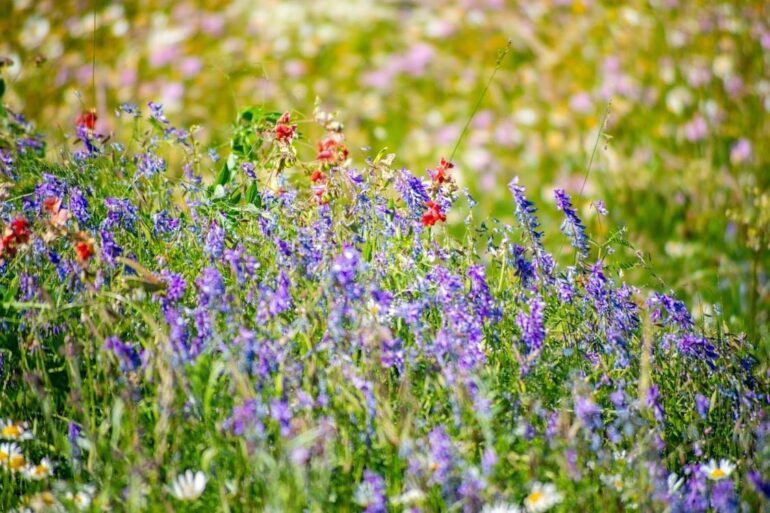
Amarillo hit me sideways. I drove into town on I-40 expecting cattle yards, dusty horizons, and maybe a decent steak — and I got all three, sure. But then I stepped through the glass doors of a conservatory on Streit Drive, and suddenly the dry Panhandle air gave way to thick, tropical humidity. Orchids draped from hanging baskets. Bromeliads hugged mossy branches. A banana tree — a banana tree — arched over a stone path while, outside the glass walls, brown prairie grass rippled under a relentless wind. That was the moment I realized this flower lover’s guide to Amarillo needed to exist, because the floral side of the Texas Panhandle is one of the best-kept secrets in the American West.
This guide covers every garden, park, and trail where flowers steal the show in and around Amarillo, Texas. You’ll find detailed descriptions of the Amarillo Botanical Gardens, the wild prairie blooms at Wildcat Bluff Nature Center, the canyon-floor wildflower spectacles at Palo Duro Canyon, the city parks with surprisingly gorgeous flower beds, and the hidden urban greenways that erupt with evening primrose each spring. I’ve included the specific flowers you’ll see, the best seasons to visit, and all the practical details — hours, admission, parking, trail distances — so you can plan a day or an entire weekend around the floral beauty of the Texas Panhandle.
And here’s a thought: if you’re reading this because someone you love lives in Amarillo and you want to send a little of that floral magic to their doorstep, browse the gorgeous selection of Amarillo flowers available for local delivery — fresh arrangements brought right to their door. But first, let’s walk through some gardens.
Amarillo Botanical Gardens — a tropical oasis in the Panhandle
Amarillo Botanical Gardens sits on the Harrington Regional Medical Center campus at 1400 Streit Drive, tucked against the western edge of Thompson Memorial Park. The gardens opened in 1988 as a community project, and today they cover roughly four acres of curated outdoor displays plus one show-stopping indoor conservatory. For a flower lover visiting the Texas Panhandle, this place is ground zero.
Let me start with the conservatory, because the conservatory is what makes your jaw actually drop.
You push through the double doors and the temperature shifts instantly. The air turns warm and damp, almost chewy, like stepping off a plane in Honolulu. Overhead, tropical palms press against the glass ceiling panels, filtering sunlight into dappled green patterns across the stone walkway below. Orchids — phalaenopsis, cattleya, dendrobium — hang in clusters from driftwood mounts and line wooden shelves at eye level. Bromeliads send up spiky red and orange inflorescences from the crooks of tree trunks. Boston ferns spill from hanging baskets in cascades so thick you can’t see the pots. A small pond anchors the center of the room, and the quiet trickle of water competes with nothing louder than your own breathing.
I remember standing there on a February afternoon, watching snowflakes drift past the glass outside while I stood surrounded by blooming jasmine. That dissonance — snow on brown plains, tropical greenhouse bursting with life just inches away — defines the entire personality of Amarillo Botanical Gardens. The conservatory stays green and lush year-round, making the gardens worth a visit even in the dead of a Panhandle winter.
But the outdoor gardens carry their own weight, especially from late March through October.
The Xeriscape Garden deserves your attention first if you’re interested in what actually thrives in this challenging climate. Amarillo Botanical Gardens designed this section as a teaching garden, and the garden demonstrates that drought-tolerant plants can be stunning. Yarrow sends up flat clusters of golden and white blooms. Black-eyed Susans form dense colonies that hum with bees in midsummer. Red and purple salvias spike upward alongside Russian sage, its lavender haze softening every hard edge. Desert marigold and blackfoot daisy fill the low borders, blooming from May well into September with almost no supplemental water. For anyone thinking about planting a flower garden in the Texas Panhandle, this section serves as a living catalog of what works.
The Fragrance Garden sits nearby, and the Fragrance Garden earns its name honestly. Lavender, rosemary, scented geraniums, and several mint varieties line raised beds designed at wheelchair height — the gardens built this section for accessibility, so visitors can touch and smell without bending. On a warm morning, the combined scent of lavender and rosemary carries ten feet before you even reach the beds.
Then there’s the Heritage Rose Garden. Amarillo Botanical Gardens maintains a collection of antique and heritage rose cultivars, many of them selected specifically for their ability to handle the Panhandle’s alkaline soil, punishing wind, and temperature extremes. These aren’t the fragile hybrid teas you nurse through summer in a coastal garden. These roses are tough. ‘Knockout’ varieties, old Bourbon roses, and rugosa hybrids bloom from May through the first hard frost in October, filling this section with waves of pink, red, coral, and cream.
Seasonal display beds near the garden entrance rotate throughout the year:
- Spring brings irises, tulips, pansies, and native wildflowers planted in demonstration rows.
- Summer showcases daylilies, zinnias, cannas, and heat-loving lantana in full riot.
- Fall shifts to ornamental grasses, chrysanthemums, and salvias still holding strong.
- Winter quiets the outdoor beds, but the conservatory keeps the green alive.
Amarillo Botanical Gardens opens its gates Tuesday through Friday from 9 AM to 5 PM and on Saturday from noon to 5 PM (hours may vary seasonally — check the gardens’ website before your visit). The gardens charge a modest admission fee, typically around $5 for adults and $2 for children, though the gardens occasionally offer free admission days tied to community events. Parking fills a small lot on Streit Drive, and visitors will find additional overflow parking along the streets bordering Thompson Memorial Park. The paths are paved and wheelchair-accessible throughout most of the grounds, including the conservatory.
Insider tips for your visit
Morning light makes the conservatory glow. Arrive when the gardens open and photograph the orchids and ferns before the sun climbs too high and blows out the contrast through the glass panels. By midday, the light turns harsh and flat inside the conservatory, and the outdoor gardens lose their soft shadows.
Amarillo Botanical Gardens hosts several annual events worth planning around. Summer concert series bring live music into the garden setting — imagine acoustic guitar drifting over blooming daylilies. The annual plant sale in spring draws serious local gardeners who snap up Panhandle-adapted varieties. And the holiday light display in December wraps the gardens in thousands of colored lights, transforming the winter landscape into something entirely different.
Here’s a smart play: combine your Botanical Gardens visit with a walk through Thompson Memorial Park (which borders the gardens to the east) and a stop at the Amarillo Zoo, which sits within easy walking distance through the park. You can fill a relaxed half-day with gardens, a shaded park stroll, and a small-zoo visit without ever moving your car.
Wildcat Bluff Nature Center — where prairie wildflowers run free
Wildcat Bluff Nature Center spreads across more than 600 acres of native shortgrass prairie on the northwest edge of Amarillo, and the center offers something no botanical garden can replicate: the unedited, uncomposed beauty of wildflowers growing exactly where they want to grow.
Let me put it plainly. This is the spot that changed how I think about the Panhandle. People call the Texas Panhandle flat and boring. Walk the trails at Wildcat Bluff in late April, and you’ll take that back in about twelve minutes.
The center maintains several miles of hiking trails through grassland that has never been plowed. That distinction matters enormously for wildflowers. Native prairie that has escaped the plow retains its original seed bank — decades, even centuries of wildflower genetics stored in the soil, waiting for the right rain at the right time. When spring moisture arrives, Wildcat Bluff responds with a display that cultivated gardens simply cannot match for sheer naturalness.
The wildflowers you’ll encounter at Wildcat Bluff change with the weeks and the rains, but certain species anchor the show reliably:
- Indian blanket (Gaillardia pulchella) carpets open sunny areas from May through August in rings of red and yellow.
- Purple prairie clover sends up slender purple cylinders along the ridgeline trail in June.
- Plains zinnia hugs the ground in dry, rocky spots, its tiny yellow flowers easy to miss unless you look down.
- Buffalo gourd sprawls across disturbed ground near the trailheads, producing large yellow trumpet-shaped blooms.
- Evening primrose opens pale yellow cups along the creekbed section, especially in April and May.
Peak wildflower months at Wildcat Bluff run from April through June, with the strongest showing typically in late April and May following a wet winter. But the center often delivers a second, smaller bloom wave in September after late-summer monsoon rains push moisture into the soil. That September bloom tends toward goldenrod, broomweed, and Maximilian sunflower — a warmer, more golden palette than the spring mix.
The trail system at Wildcat Bluff gives you options depending on your energy level and time. The main loop trail covers roughly two miles over easy terrain with gentle rolling hills — comfortable for most walkers and perfect for wildflower photography because the trail passes through multiple habitat types within a short distance. The ridge trail branches off the main loop and climbs to higher ground where you’ll find panoramic views of the surrounding prairie plus different plant communities adapted to the drier, more exposed soil. The creekbed section drops into a natural drainage where extra moisture supports species you won’t see on the open prairie — look for moisture-loving wildflowers and shrubs along this stretch.
The visitor center at Wildcat Bluff houses native plant exhibits, live animal displays featuring Panhandle wildlife, and a small gift shop. The gift shop sells wildflower seed packets sourced from regional suppliers — a genuinely useful souvenir for anyone who wants to grow a piece of the Panhandle prairie back home.
Wildcat Bluff Nature Center opens Tuesday through Saturday from 9 AM to 4:30 PM and closes on Sundays and Mondays. The center charges a small admission fee (typically $3–$5 for adults, less for children). Visitors reach the center by driving north on Soncy Road and following the signs; a gravel parking area accommodates about 30 cars comfortably. Bring water, wear sunscreen, and carry a hat — the trails offer almost no shade, and the Panhandle sun at 3,600 feet elevation hits harder than people expect.
One more thing. If you’re carrying a camera, bring a macro lens or use your phone’s close-up mode. Many of the prairie wildflowers at Wildcat Bluff are small — some no bigger than a dime — and their intricate patterns reward a close look. Indian blanket petals, for example, show gradient rings of red fading to yellow-tipped edges that look almost painted.
Palo Duro Canyon — wildflower spectacle 30 minutes from town
Palo Duro Canyon State Park sits roughly 25 miles south of Amarillo, and the park protects the most dramatic landscape in the entire Texas Panhandle. The canyon stretches 120 miles long, reaches 800 feet deep at its most dramatic points, and ranks as the second-largest canyon in the United States — only the Grand Canyon surpasses Palo Duro in sheer scale. Most visitors come for the red rock walls and the famous Lighthouse Rock formation. But here’s the thing: flower lovers should come for the canyon floor.
The canyon creates microclimates that don’t exist anywhere on the open plains above. Shaded north-facing walls stay cooler and retain moisture longer. Cottonwood-lined creek bottoms provide year-round water in an otherwise arid landscape. Rocky ledges trap pockets of organic soil that support specialized plant communities. The result? Palo Duro Canyon grows flowers that would wither and die on the flat prairie just a few hundred feet overhead.
Now, picture this. You drive down the steep switchback road into the canyon on a morning in late April. The plains above were brown and windswept. But as the road descends, color starts appearing on the canyon walls. Then you reach the bottom, and suddenly you’re surrounded by wildflower meadows framed by layers of red, orange, and cream-colored rock. It’s genuinely one of the most beautiful sights in Texas.
Here’s what to look for, season by season:
Spring (March through May) delivers the headline act. Bluebonnets — yes, actual Texas bluebonnets — grow on the canyon floor where the sheltering walls protect the plants from the worst Panhandle wind. Indian paintbrush adds splashes of red-orange among the blue. Wine cups (Callirhoe involucrata) spread magenta blooms low to the ground along trail edges. And in May, the prickly pear cacti explode. I’m not exaggerating. Prickly pear cactus blooms at Palo Duro Canyon produce flowers the size of your palm in shocking magenta, hot pink, and butter yellow — sometimes all on the same plant. The rocky slopes along Capitol Peak Trail turn into a cactus flower gallery that stops hikers in their tracks.
Summer (June through August) shifts the palette. Globe mallow opens apricot-colored cups along sunny trail margins. Skeleton plant (Lygodesmia) adds pops of pink in the driest spots. After summer monsoon rains, cenizo bushes on rocky ledges burst into purple bloom so quickly that locals call cenizo the “barometer bush.” The canyon stays noticeably cooler than the plains above, so summer flower-spotting hikes remain more comfortable down here than almost anywhere else in the Panhandle.
Fall (September through October) brings the golden wave. Maximilian sunflower lines the roadsides and trail edges in dense yellow stands that can reach six feet tall. Gayfeather (Liatris) sends up purple spikes from the grassier areas. Broomweed turns entire open stretches into fields of gold. The combination of golden wildflowers plus the warm-toned canyon walls in autumn light creates a photographer’s paradise.
Now let me walk you through the best trails for flower spotting, because not all Palo Duro trails deliver the same floral experience.
Lighthouse Trail covers six miles round-trip at a moderate difficulty level, and the trail ranks as the park’s most popular hike for good reason. The first mile of the Lighthouse Trail crosses open meadows along the canyon floor — wildflower meadows in spring — before the trail begins its climb toward the iconic Lighthouse formation. Flower lovers can hike just the first mile or two, enjoy the meadow blooms, and turn around without committing to the full rocky ascent.
Paseo del Rio Nature Trail offers an easy, roughly one-mile loop along the Prairie Dog Town Fork of the Red River. The creek-side habitat supports moisture-loving wildflowers, cottonwood shade, and lush vegetation that contrasts sharply with the dry canyon slopes just yards away. This trail suits families, casual walkers, and anyone who wants wildflower scenery without a strenuous hike.
Capitol Peak Trail delivers the best prickly pear cactus bloom experience in May. The trail crosses rocky slopes where prickly pear grows in dense clusters, and when those clusters bloom, the visual effect is extraordinary — spiny green pads crowned with satiny flowers in neon pink and yellow against a backdrop of red rock. Bring a zoom lens and resist the urge to get too close. The spines are no joke.
Palo Duro Canyon State Park charges an entrance fee of $8 per adult (children 12 and under enter free). The park opens its gates at 7 AM daily, and the gates close at 10 PM. Arrive early on spring weekends — the park occasionally reaches vehicle capacity on peak wildflower days, and rangers will close the gate until cars leave. Bring at least two liters of water per person, wear sturdy shoes, apply sunscreen generously, and carry a hat. The canyon floor sits lower than the rim, but the Panhandle sun doesn’t care about elevation. It finds you.
One photography tip before we move on. Golden hour in Palo Duro Canyon is extraordinary. The low-angle sunlight ignites the red rock walls into deep crimson and amber while wildflowers in the foreground catch that same warm glow. Arrive an hour before sunset, set up along the Paseo del Rio trail or the first stretch of Lighthouse Trail, and shoot facing west or northwest. You’ll get images that look like paintings.
City parks where flowers steal the show
Amarillo maintains more than 40 public parks, and while not every park qualifies as a flower destination, several deliver surprising floral beauty to anyone willing to slow down and look. Think of these parks as the supporting cast — smaller roles, genuine charm, and no admission fee.
Thompson Memorial Park
Thompson Memorial Park stretches across a large green corridor along the eastern boundary of the Amarillo Botanical Gardens and wraps around the Amarillo Zoo, making the park an essential connector for any flower-lover’s day trip in this part of town. Mature trees — elms, cottonwoods, and some impressive junipers — line the walking paths and provide welcome shade during summer months. Park staff maintain seasonal flower beds along the main pathways, particularly near the memorial monuments in the park’s central section, where spring plantings of tulips and pansies give way to summer displays of petunias and marigolds.
The real beauty of Thompson Memorial Park, though, lies in how the park links three distinct experiences into one seamless outing. Start at the Botanical Gardens in the morning, walk east through Thompson Memorial Park for a shaded stroll past the flower beds, then loop north to visit the Amarillo Zoo. Pack a lunch and eat at one of the park’s picnic tables under the cottonwoods. You can spend four hours here without running out of things to enjoy, and you’ll never need to move your car from the Streit Drive lot.
Sam Houston Park
Sam Houston Park sits in one of Amarillo’s established residential neighborhoods, and the park carries the quiet, lived-in feel of a place that’s been part of the community for decades. Established shade trees — mostly elms and ash — canopy the walking areas, and the park features rose plantings that local gardening clubs have maintained over the years. Community garden plots along one edge of Sam Houston Park give visitors a chance to see what dedicated Amarillo gardeners grow in their own backyards: tomatoes and peppers, sure, but also zinnias, sunflowers, marigolds, and cosmos planted in colorful rows alongside the vegetables.
The demonstration beds at Sam Houston Park serve as an informal teaching resource. Want to know which flowers handle the Panhandle wind and heat? Walk these beds in July and see what’s still standing and blooming. The survivors are your answer. I spotted lantana, rudbeckia, and purple coneflower thriving here on a 98-degree afternoon when most sensible organisms — myself included — wanted to be indoors.
Medical Center Park
Medical Center Park occupies a well-maintained green space near the hospital district, and the park surprises visitors with its carefully designed landscaping. A paved walking loop circles the perimeter, passing through beds of seasonal flowers that park staff rotate throughout the growing season. Spring brings a strong showing of tulips and irises — Medical Center Park has become a quiet local favorite for quick lunchtime walks during April and May specifically because of those tulip plantings.
The park’s atmosphere feels more polished than many of Amarillo’s larger, more rugged green spaces. Benches line the path at regular intervals. The landscaping stays neat. It’s a small park, easy to walk in 20 minutes, and genuinely pleasant. Not every flower experience needs to be an epic canyon hike.
Bones Hooks Park
Bones Hooks Park carries a layer of meaning that deepens the visit beyond horticulture. The park takes its name from Matthew “Bones” Hooks, a Black cowboy and community leader who helped shape Amarillo’s North Heights neighborhood in the early twentieth century. The park serves as both a recreational space and a historical landmark, and community volunteers maintain flower beds throughout the grounds as an act of neighborhood pride and remembrance.
The flower beds at Bones Hooks Park aren’t elaborate botanical displays. They’re something better — personal. Neighbors plant marigolds, roses, and periwinkles in plots they tend themselves. The result feels warm and authentic in a way that formal gardens sometimes miss. If you’re visiting Amarillo and want to understand the city beyond the tourist highlights, spend 30 minutes at Bones Hooks Park.
A few more parks worth a quick visit
Memorial Park offers shaded walking paths with native plantings and seasonal flower beds near the entrance — a calm 15-minute stop. Stephen F. Austin Park maintains a playground surrounded by mature landscaping and scattered wildflowers in the less-mowed areas along the perimeter. Glenwood Park provides open green space where springtime brings patches of clover blooms and dandelions that, frankly, look charming in the right light — not every flower needs to be cultivated to be beautiful.
Hobo Hills and the 9th Street trails — Amarillo’s hidden greenway
Amarillo’s Hobo Hills trail network threads through a series of natural drainage channels that cut across the city’s residential neighborhoods, and the trails deliver a wildflower experience you won’t find in any curated park or garden. This is Amarillo’s secret greenway — the unofficial, slightly scruffy, surprisingly beautiful trail system that most tourists never discover.
The Hobo Hills trails follow undeveloped green corridors where the city hasn’t landscaped, mowed, or “improved” the vegetation. Native grasses, shrubs, and wildflowers grow without human intervention along these drainage paths. The result is a ribbon of wild prairie running through suburban Amarillo — a living reminder of what the land looked like before the houses went up.
Spring and early summer activate the Hobo Hills trails in ways that catch even longtime Amarillo residents off guard. After a good rain in April or May, evening primrose opens pale yellow cups along the trail edges seemingly overnight. Prairie verbena spreads low mats of purple flowers across bare patches of ground. Silverleaf nightshade — toxic to eat but visually striking — produces purple star-shaped blooms that photograph beautifully against the dusty trail surface. The flowers appear in waves rather than all at once, so two visits a week apart can look completely different.
The trail surface at Hobo Hills consists mostly of packed dirt with some paved sections where the trail crosses neighborhood streets. The terrain stays flat with minimal elevation change, making the trails accessible for casual walkers, joggers, parents with strollers, and dog owners. The city allows dogs on leash throughout the Hobo Hills system.
Best time of day? Early morning. The Panhandle sun hasn’t reached full intensity yet, the wildflowers are still dewy, and the light hits the trail edges at a low angle that makes even the scruffiest blooms look intentional. I walked a two-mile section of the Hobo Hills system on a May morning and counted seven different wildflower species without trying hard. A dedicated botanist could probably triple that number.
The trails connect loosely to the broader 9th Street trail corridor, which extends the walkable greenway further into Amarillo’s east side. Some sections lack clear signage, so pull up the trail on a mapping app before you go. The adventure of finding your way is part of the charm — but losing the trail in a drainage ditch is not.
What flowers thrive in the Texas Panhandle?
Amarillo sits at 3,600 feet elevation in the heart of the Texas Panhandle, and the region’s growing conditions test every plant that tries to survive here. Understanding those conditions helps flower lovers appreciate why certain species dominate the local landscapes — and why the Amarillo Botanical Gardens’ conservatory feels like a small miracle.
The numbers tell the story. Amarillo receives about 20 inches of rain per year — roughly half of what Dallas gets and a third of what Houston averages. The soil runs alkaline, heavy with caliche in many areas, and the topsoil layer can be thin. Summer temperatures regularly exceed 100°F, while winter nights plunge to single digits. Wind blows almost constantly during spring, with gusts exceeding 50 mph during storm season. And the humidity? Almost nonexistent for months at a time.
These conditions would flatten a hydrangea. But the flowers that have adapted to the Texas Panhandle don’t just survive — the flowers adapted to this climate often bloom with an intensity that seems to defy the harshness around them.
Native wildflowers that thrive across the Panhandle include Indian blanket (Gaillardia), which tolerates drought, wind, and poor soil with cheerful indifference. Purple coneflower (Echinacea) anchors native plantings with sturdy stems that resist wind damage. Prairie zinnia stays low to the ground, avoiding the worst gusts. Wine cup spreads magenta blooms across disturbed ground and road shoulders each spring. Blackfoot daisy forms tidy mounds of white flowers that bloom for months without supplemental water. Desert marigold lines roadsides with sunny yellow blooms from spring through fall. Globe mallow opens soft apricot cups on dry, rocky ground where almost nothing else bothers to grow.
Popular garden flowers that Amarillo residents grow successfully include zinnias (the Panhandle’s unofficial garden champion — heat-loving, drought-tolerant, and available in every color imaginable), lantana, salvia (both annual bedding varieties and perennial species like autumn sage), rudbeckia (black-eyed Susan), and ornamental grasses such as Mexican feather grass and Karl Foerster reed grass. Russian sage — technically a shrub but used like a perennial — thrives in the alkaline, dry conditions and produces lavender-blue flower spikes that hum with bees all summer.
Xeriscaping isn’t a trend in the Texas Panhandle. Xeriscaping defines how serious Panhandle gardeners approach their landscapes. The Xeriscape Garden at Amarillo Botanical Gardens teaches visitors which drought-tolerant species work in this specific climate, and the garden demonstrates that water-wise landscaping can be genuinely beautiful rather than just practical. Every flower lover visiting Amarillo should spend at least 15 minutes studying that xeriscape display.
One note about Texas bluebonnets, since visitors always ask: bluebonnets grow in the Amarillo area, but bluebonnets need protection from the worst Panhandle wind. Palo Duro Canyon provides that protection. The sheltered canyon floor supports bluebonnet colonies that bloom in March and April, and seeing bluebonnets against red canyon rock — rather than the usual green Hill Country pastures — creates a visual combination unique to this part of Texas.
| Flower | Bloom season | Where to see it in Amarillo |
|---|---|---|
| Indian blanket (Gaillardia) | May – September | Wildcat Bluff, Palo Duro Canyon |
| Prickly pear cactus bloom | May – June | Palo Duro Canyon trails |
| Evening primrose | April – June | Hobo Hills trails, roadsides |
| Heritage roses | May – October | Amarillo Botanical Gardens |
| Bluebonnet | March – May | Palo Duro Canyon floor |
| Prairie zinnia | June – September | Wildcat Bluff Nature Center |
| Tropical orchids (conservatory) | Year-round | Amarillo Botanical Gardens |
| Maximilian sunflower | September – October | Palo Duro Canyon roadsides, Wildcat Bluff |
| Globe mallow | June – August | Palo Duro Canyon, dry trail edges |
| Purple prairie clover | June – July | Wildcat Bluff Nature Center ridge trail |
Best time of year to visit Amarillo for flowers
Amarillo rewards flower lovers in every season, but the rewards differ dramatically depending on when you arrive. Here’s the honest breakdown, month by month, so you can time your visit to match exactly the kind of floral experience you want.
Spring (late March through May) delivers the peak wildflower season, and spring stands as the single best window for flower lovers visiting the Texas Panhandle. Palo Duro Canyon’s floor erupts with bluebonnets, Indian paintbrush, and wine cups starting in late March, building toward a prickly pear cactus bloom climax in May. Wildcat Bluff Nature Center greens up with Indian blanket, evening primrose, and prairie verbena as soil temperatures rise. Amarillo Botanical Gardens plants spring display beds of tulips, pansies, and irises while the Heritage Rose Garden begins its first flush. The Hobo Hills trails wake up with wildflowers along the drainage corridors. Everything is blooming. Everything is fresh. The wind still blows — this is the Panhandle, after all — but the color compensates for any inconvenience.
Timing matters within spring. A wet winter followed by warm March rains produces the most spectacular wildflower season. A dry winter delays and diminishes the bloom. Check local wildflower reports from Texas Parks & Wildlife or Amarillo gardening groups on social media before you commit to travel dates.
Summer (June through August) brings serious heat — afternoons regularly hit 95–105°F — but the flowers that thrive in Panhandle summers are tough and brilliant. Zinnias, sunflowers, and canna lilies dominate the Botanical Gardens’ display beds. Lantana and salvia blaze in city park flower beds. Globe mallow and skeleton plant bloom along Palo Duro Canyon trails. Morning visits are essential during summer. Arrive at gardens and trailheads before 9 AM, enjoy the flowers in gentle light, and retreat to air conditioning by noon. The conservatory at Amarillo Botanical Gardens offers a climate-controlled alternative for afternoon flower viewing — lush tropical greenery with no sunburn risk.
Fall (September through October) delivers a second wildflower wave that surprises many visitors. Late-summer monsoon rains trigger blooms of Maximilian sunflower along Panhandle roadsides — golden walls of sunflowers lining every highway approach to Amarillo. Gayfeather spikes purple along trail edges at Wildcat Bluff. Broomweed turns open fields gold. Temperatures cool into the 70s and 80s, making trail hikes comfortable again. Fall is an underrated season for flower-loving visitors, and the smaller crowds at Palo Duro Canyon and the Botanical Gardens add to the appeal.
Winter (November through February) quiets the outdoor gardens and trails. Frost knocks back most perennials by mid-November, and the brown dormancy of the Panhandle winter landscape dominates. But the conservatory at Amarillo Botanical Gardens stays warm and green year-round, offering tropical orchids, ferns, and palms regardless of what’s happening outside.
What say you?
Thoughts on this guide to Amarillo?
Let’s hear it!