
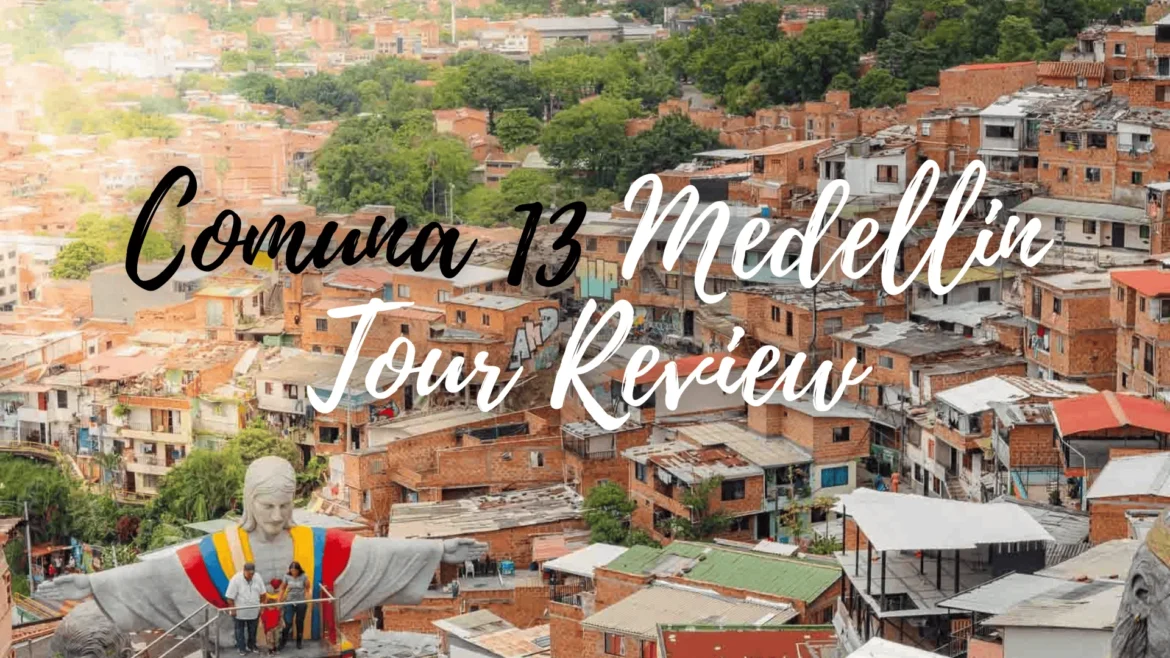
When I first heard about the now-famous Comuna 13 Medellin tour, I wasn’t sure it was for me. The neighborhood’s troubled history, once considered one of the most dangerous places in Colombia, combined with its current status as a highly commercialized tourist attraction, made me hesitant.
Was it going to be one of those glossy, Instagram-filtered tours that skim the surface of real stories?
But then I met Julio, a local guide I had already toured Medellín with through one of the city’s best free walking tours. Julio grew up in Comuna 13. His stories weren’t based on research or secondhand info; they were his life. That connection made the tour feel less like sightseeing and more like listening to a living history. And I’m so glad I did it.
📌 Book Your Comuna 13 and Cable Car Tour Here
Comuna 13 History: From Conflict to Transformation

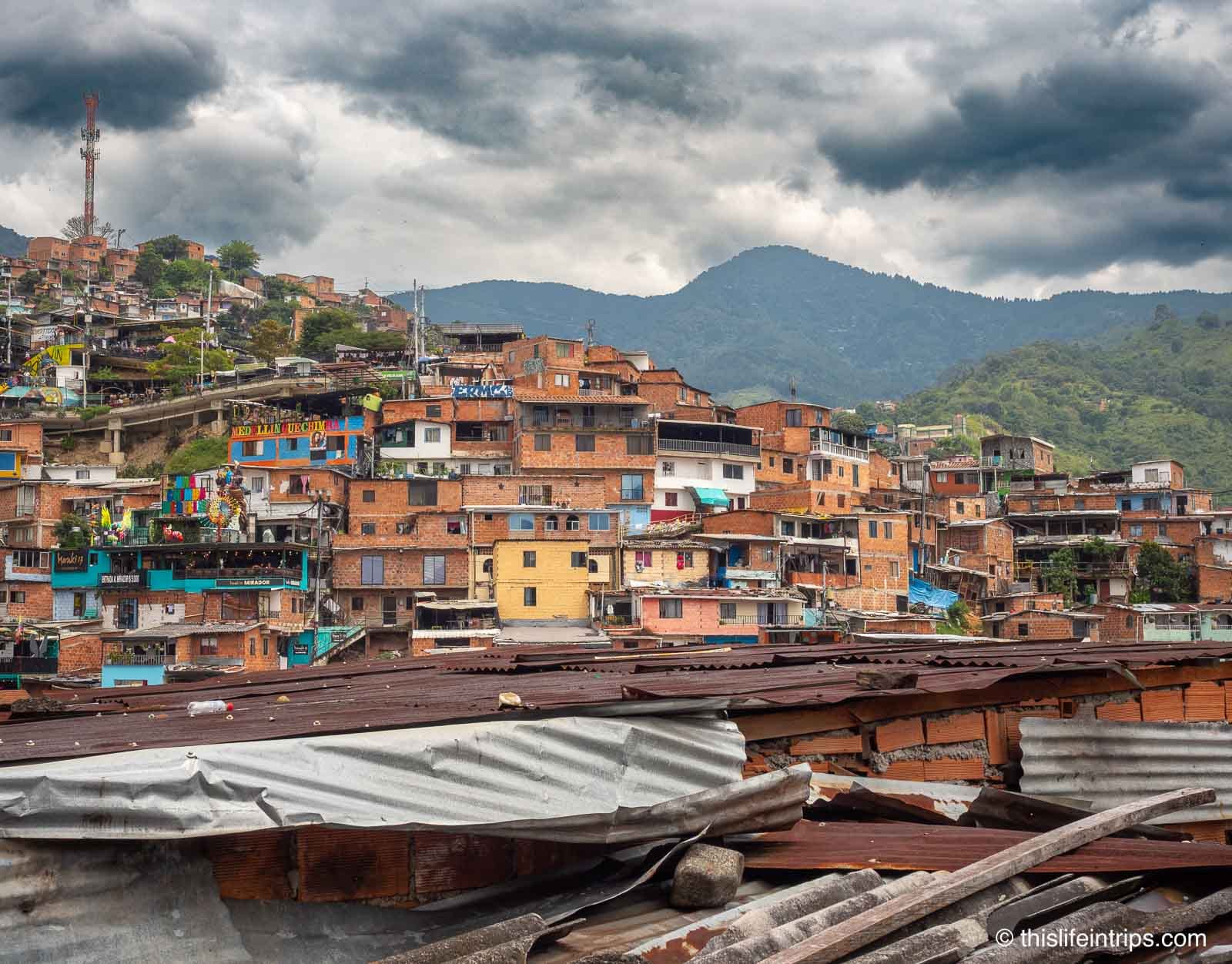
To understand what makes Comuna 13 special, you have to understand its past. Located on the steep hillsides of Medellín, Comuna 13 was once a no-go zone for even the most hardened locals.
Its geography made it the perfect hideout for guerrilla fighters, and over the years, the community became a battleground between paramilitary groups, government forces, and gangs, a violent pendulum that swung back and forth.
Julio described this history in four phases:
- Guerrilla control
- Paramilitary retaliation
- Government intervention
- A return to gang influence


Throughout all of this, Comuna 13’s residents lived in fear. Snipers occupied rooftops. Police hesitated to enter. Julio shared how he lost a neighbor, himself a gang leader, and how that man’s son now continues the cycle. Grenades once exploded just outside his home. His mother, determined to keep him on a better path, became his anchor.
One of the most chilling facts he shared was the existence of Colombia’s largest known mass grave, located just beyond view of the lively tourist areas. Estimates suggest anywhere from 90 to 400 victims were buried there during the height of the conflict. Efforts to exhume bodies only began in 2022, and so far, just a few have been recovered.

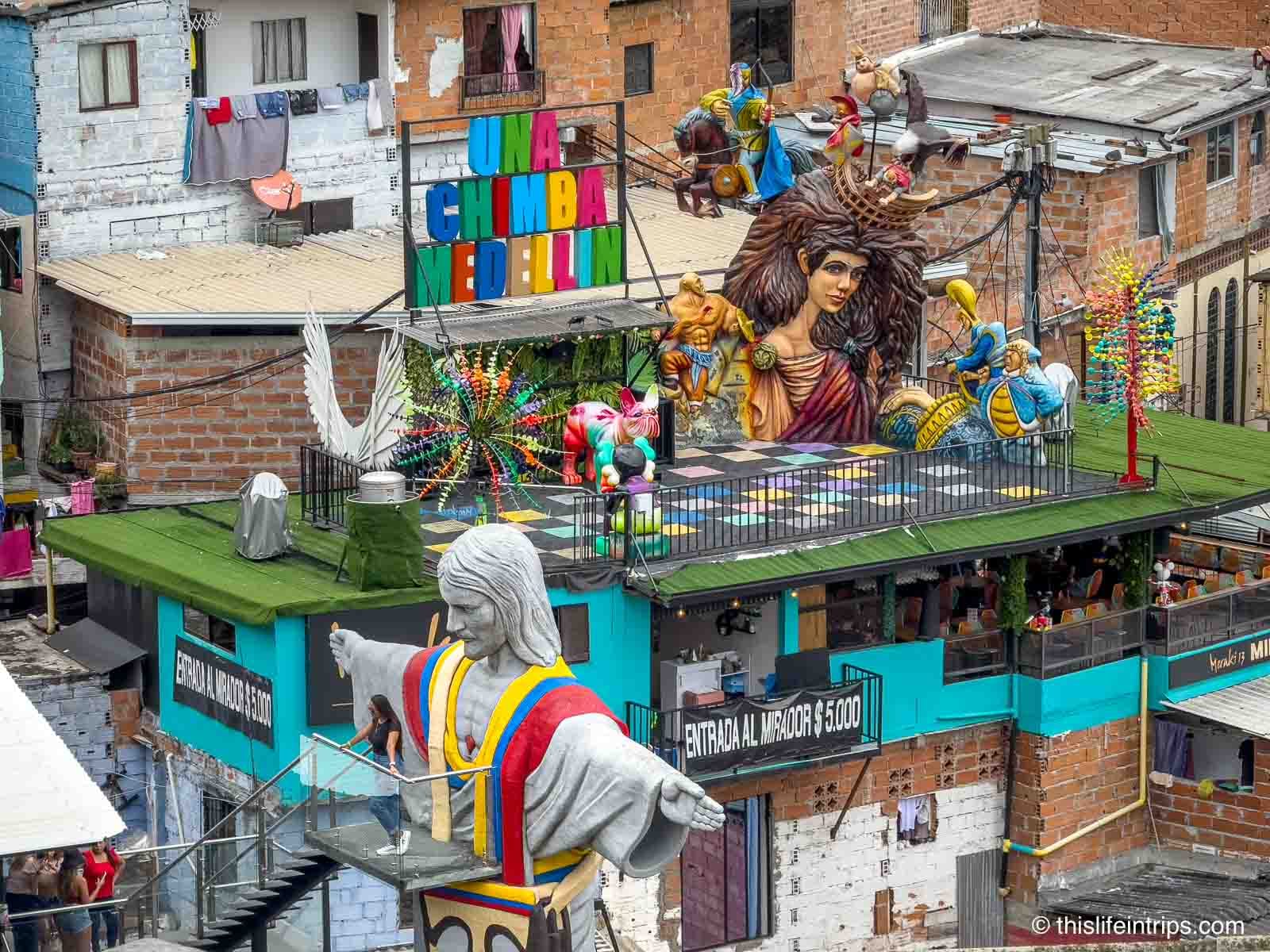
To make matters worse, a circus was erected nearby, literally steps from where human rights violations are being investigated. As Julio put it, imagine someone setting up an ice cream stall outside Auschwitz. The comparison was jarring, and completely changed how I viewed the colorful murals around us.
Comuna 13 Today: Street Art, Escalators, and Photo Ops
Today, Comuna 13 Medellin is known for its vibrant street art, outdoor escalators, food stands, and tourist-friendly performances. But as Julio led us through less-traveled alleys, he pointed out how much of the graffiti-tour experience has been over-glamorized.
Many original murals have faded or been replaced by sponsored works. The area is still, in many ways, run by local gangs, and tourism dollars don’t always filter down to the residents who need them most.
Still, there’s hope here too.


Community centers have sprung up. One woman, a single mom of two by age 20, learned English and started her own company: Zippy Tours. The city, with the help of the municipal government, built outdoor escalators, a community center, and better roads to connect residents to opportunities. Breakdancers, musicians, and tour guides like Julio offer new role models for the next generation.
Flights to Medellin? Compare prices on flights to Medellin with SkyscannerA Walking Tour That Felt Real
Our day with Julio began at the base of the hills, where we started the slow, winding climb into Comuna 13’s heart. Unlike many Comuna 13 walking tours, Julio took us along quiet, local paths. He pointed out where snipers used to sit, sharing stories of gunfights that were once daily occurrences.


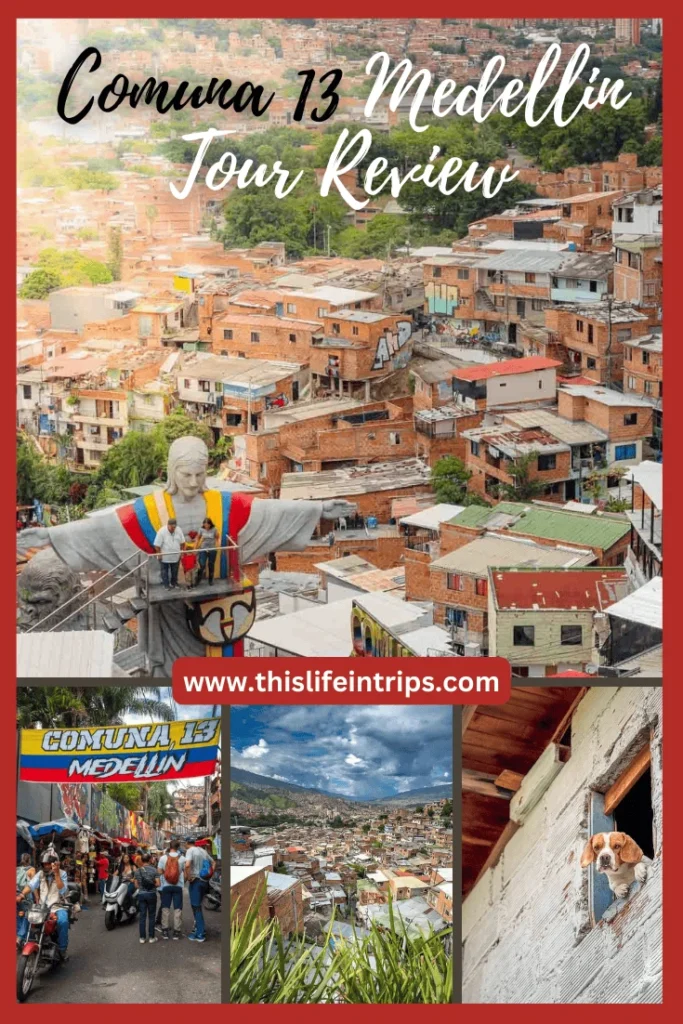
There weren’t many flashy murals here, just homes, balconies, and street corners with memories etched into them. Also, the odd pet keeping watch 😉


We avoided the main graffiti corridors packed with bars, posing tourists, and that almost Disneyland-like atmosphere. After a heavy but surprisingly optimistic tour, I actually felt more comfortable being in that environment.
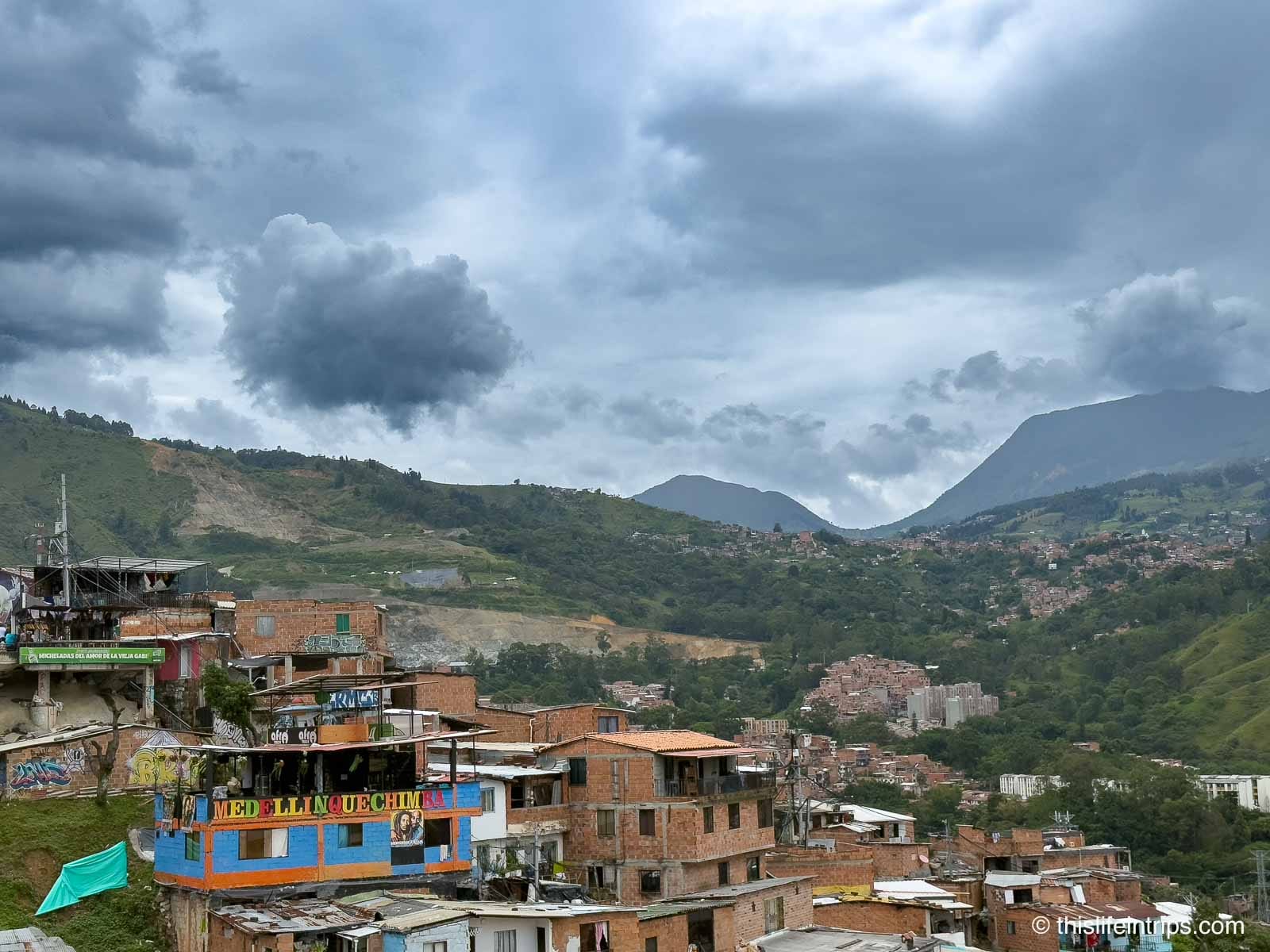
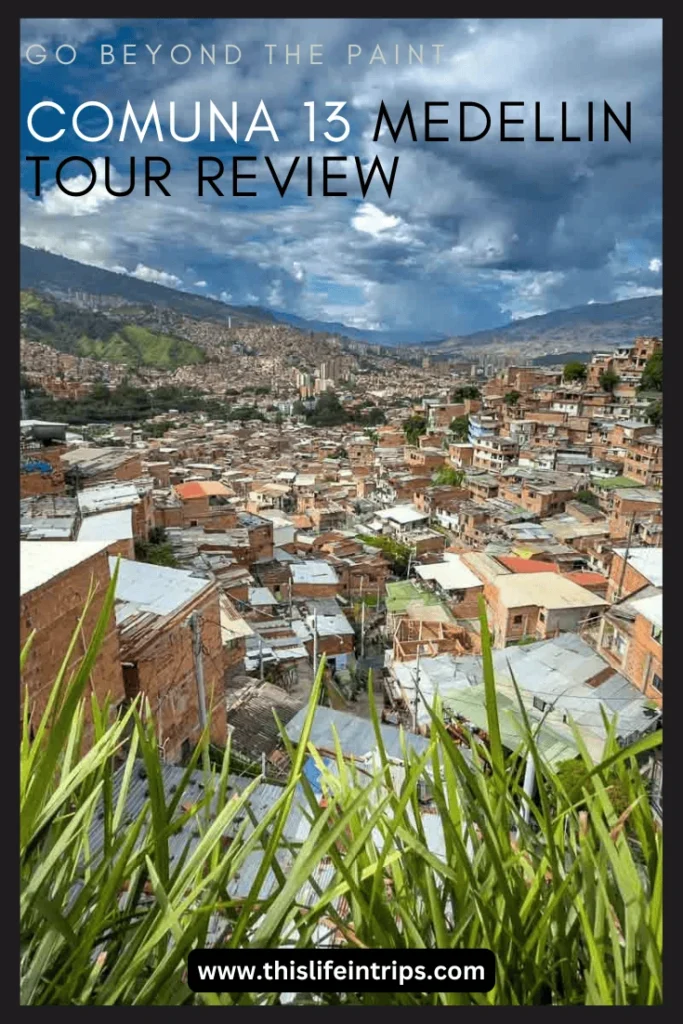
At the top, we paused for a mango michelada, spicy and sweet, and finally let ourselves take in the incredible view of the Medellín valley.


Ironically, that same view includes the hillside where the mass grave lies, unseen by most visitors snapping selfies nearby. That contrast hit hard, and without this tour, I don’t think I would have felt at ease enough to even stand there.

Riding the Medellin Cable Car: A Highlight
After the tour, we rode the Medellín cable car, a public transit system that doubles as a floating observatory over the city’s most overlooked neighborhoods. Julio explained how the metro and cable cars are a huge point of pride for locals.
They represent so much more than transportation. For many, they symbolize Medellín’s transformation and the belief that the city could rebuild itself with dignity and connection at the center.


For less than $1 USD, we soared above the barrios, watching the city stretch into green hills and red-brick rooftops. It was one of the highlights of the day. The cable cars aren’t just for sightseeing—they’ve changed lives.
Before, some Comuna 13 residents spent hours navigating steep hills or long, unreliable commutes into the city center. Now, they float there in minutes. It’s a quiet but powerful reminder of how thoughtful infrastructure can reshape opportunity and restore pride in a community.
Final Thoughts: Comuna 13 Tours Done Right
Was I glad I went on a Comuna 13 tour? Absolutely. But I’m even more glad I went with someone who lived it. Julio’s perspective wasn’t curated for tourists. It was raw, emotional, and honest. He didn’t just show us murals, he showed us memories.

So if you’re planning to visit, skip the Instagrammable route. Find a guide with roots in the neighborhood. Go off the beaten path. And leave with more than just a photo, you’ll leave with perspective.
📌 Book Your Comuna 13 and Cable Car Tour Here
Planning to visit Medellín? Here is my full itinerary plan for the perfect trip to Medellin. Also, check out my stays at the Landmark Hotel Medellin or book a Medellín food tour like this one with La Mesa for more authentic local experiences.
Taking a Laureles Medellin Real City Tours food tour is another great way to experience the local food scene—read more in my full review.
And if you’re flying in, don’t miss the SALAS VIP lounge. Also, here’s my Avianca A320 Business Class review to see if upgrading is worth it! Have an early flight out? Consider a stay at this great Medellin Airport hotel!
☕️ Traveling soon? Apply for your Colombia tourist visa easily through iVisa
FAQ: Comuna 13 Medellin Tour
Is Comuna 13 safe to visit?
Yes, especially during the day and with a local guide. Safety has improved greatly thanks to government investment and community resilience.
Should I do a guided or self-guided Comuna 13 walking tour?
A guided tour is strongly recommended. You’ll get context, personal stories, and access to safer, less touristy parts of the neighborhood.
What is the Medellin cable car and how does it relate to Comuna 13?
The cable car is Medellín’s innovative transit solution that connects hillside neighborhoods like Comuna 13 to the city center. It’s affordable, scenic, and transformative.
How long does a Comuna 13 tour take?
Most tours last around 2–3 hours, not including time spent riding the cable car afterward.
What should I wear or bring?
Comfortable walking shoes, sunscreen, cash for snacks or drinks, and a respectful attitude.
What say you?
Thoughts on this Comuna 13 Medellin Tour review?
Let’s hear it!
Looking for more travel reviews?


