
Grocery shopping abroad offers travelers a close look at everyday food culture. This can make travel more immersive, but also confusing. Shelves reveal local ingredients, regional staples, and price differences, but unfamiliar labels, packaging, and languages can make grocery shopping abroad a bewildering experience. Here’s how to make it easier.
A fresh perspective on food safety
One important thing to remember is that food safety protocols differ from country to country. In the United States and most of Europe, you can be reasonably assured that food recall procedures are in place to protect you – for example, brands like Taylor Farms will quickly pull their produce from shelves if there’s an issue. But the same standards don’t necessarily apply globally. This is especially the case for open-air markets. Instead, you may have to rely more on the care the vendor has for their customers, and your own judgment of the produce.
Here are a few signs to look out for when trying to separate fresh, healthy produce from dodgier fare:
- Bright, consistent colors. Dark or light spots and faded or degraded coloration can be signs of old, even decaying, produce.
- Texture and feel. While some fruit and veg is meant to be ‘squashy’, in general, healthy produce will feel firm and heavy for its size.
- Fresh stems and leaves. If stems and leaves are too dried out and crumbly, the produce is probably less fresh than you’d like.
- Scent. This is one of the most instinctively reliable ways to tell how fresh and healthy produce is. If you lower your nose to something and it smells ‘off’ to you, it probably is.
Local brands on the shelves
Local brands occupy much of the shelf space in grocery stores around the world. Some visitors reach for familiar international labels first, but browsing local products can be a much better way to explore a place’s true tastes and culture. A jar of regional sauce, a snack produced in the area, or a breakfast staple used by residents can reveal common cooking traditions more clearly than a menu written for visitors.
The issue, of course, is that you may not know how to use the items you’ve picked. Don’t be afraid to ask, or use translation apps to interpret cooking and serving suggestions on labels. And certainly don’t be afraid to experiment! Sure, you might make some disasters, but you may also discover a new favorite food.
Understanding culinary differences
Food categories abroad don’t always align with those at home. You might find items grouped differently or entirely new sections dedicated to local staples. It’s also important to note that the USA is unusual in its use of pounds, ounces, and Fahrenheit. In other English-speaking countries like the UK or Australia, you’ll encounter grams, kilograms, and Celsius. But don’t worry—it’s easy to convert measurements online, so you’ll know exactly how much you’re buying or cooking.
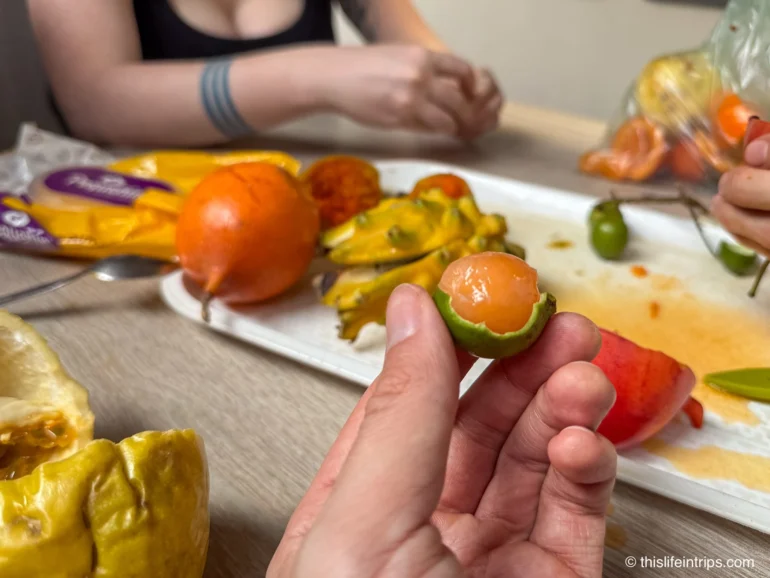
Grocery shopping abroad also introduces you to ingredients you might not recognize. Vegetables, grains, or spices that are common locally may seem unfamiliar. If you’re unsure about a new item, start by purchasing small amounts. This gives you the chance to experiment in the kitchen, figure out how to use it, and see if it suits your taste. Over time, this makes grocery shopping abroad a fun way to expand your palate.
Watching currency and prices
Prices in a different currency can be confusing on the first shopping trip. Checking conversion rates beforehand will help you to understand the real cost of items on the shelf. You’ll get the hang of it after a few purchases.
Shopping etiquette
Store behavior varies between countries. Open markets sometimes involve bargaining, while supermarkets usually set fixed prices. Observing how other customers interact with vendors or cashiers will help you to learn what is expected. Note that simple courtesy also helps transactions run smoothly, no matter where you’re shopping. Waiting your turn, greeting staff, and following posted rules prevent unnecessary tension at the counter.
Packaging and storage
Travelers staying in apartments or short-term rentals often buy groceries for several days at a time. Reading storage instructions on packaging will help you to avoid spoilage, especially when refrigerator space is limited.
Dry goods, bread, fruit, and packaged foods often work well for short stays because they last longer without strict storage conditions.
Is Grocery Shopping Abroad On Your Travel To Do?
Grocery shopping abroad shows how residents shop, cook, and organize everyday meals. Ingredients on the shelves, local brands, and shopping habits all reveal details about daily life that visitors might not notice elsewhere. While the ingredients, language, measurements, and so on may feel unfamiliar at first, it’s always worth experimenting with the produce you buy to discover new flavors and get closer to the local culture.
What say you?
Thoughts on Grocery Shopping Abroad?
Let’s hear it!