If there’s one thing I always try to do when arriving in a new city, it’s a free walking tour. They’re perfect for getting your bearings, understanding the layout, and seeing parts of town you may otherwise avoid or overlook.
When that city is Medellín, Colombia, a place with a complicated reputation and an even more fascinating past, a guided experience like the Medellin free walking tour with Real City Tours is a must. Especially if it’s your first day or two in the city.
These tours aren’t just a chance to stretch your legs after a long-haul flight. They provide history, context, safety tips, and cultural insights in a friendly, open format. In Medellín’s case, they also help dispel the often-negative perceptions many travelers arrive with. Trust me, this Medellín city tour helped shape my entire trip.
Here you’ll find my full review, plus details on how to book the tour for your own visit.
Flights to Medellin? Compare prices on flights to Medellin with SkyscannerBook Ahead — This Tour Fills Up Fast
Before diving in, it’s worth noting that this free walking tour is extremely popular and regularly books up. Although the tour itself is free, it’s best to reserve your spot in advance for a small fee. If you plan on joining, save your place early to avoid missing out.
And, if you use my link to reserve, it helps support this site and allows me to keep creating more travel content.
📌 Book Your Medellín Free Walking Tour Here
Real City Tours: A Passion Project Turned Medellín Institution
Real City Tours was founded in 2013 by Pablo Álvarez, a local who was tired of visitors sticking to Poblado or signing up for sensationalized Pablo Escobar tours. He wanted travelers to see the real Medellín, and that mission lives on in the guides Real City Tours employs.
☕️ Traveling soon? Apply for your Colombia tourist visa easily through iVisa
Meeting Our Medellin Walking Tour Guide
Our tour kicked off at the Alpujarra Metro Station, the meeting point for Real City Tours’ iconic Medellin walking tour. From there, our group quickly moved to a shady spot while our guide, Julio, launched into what can only be described as a masterclass in Medellín history.
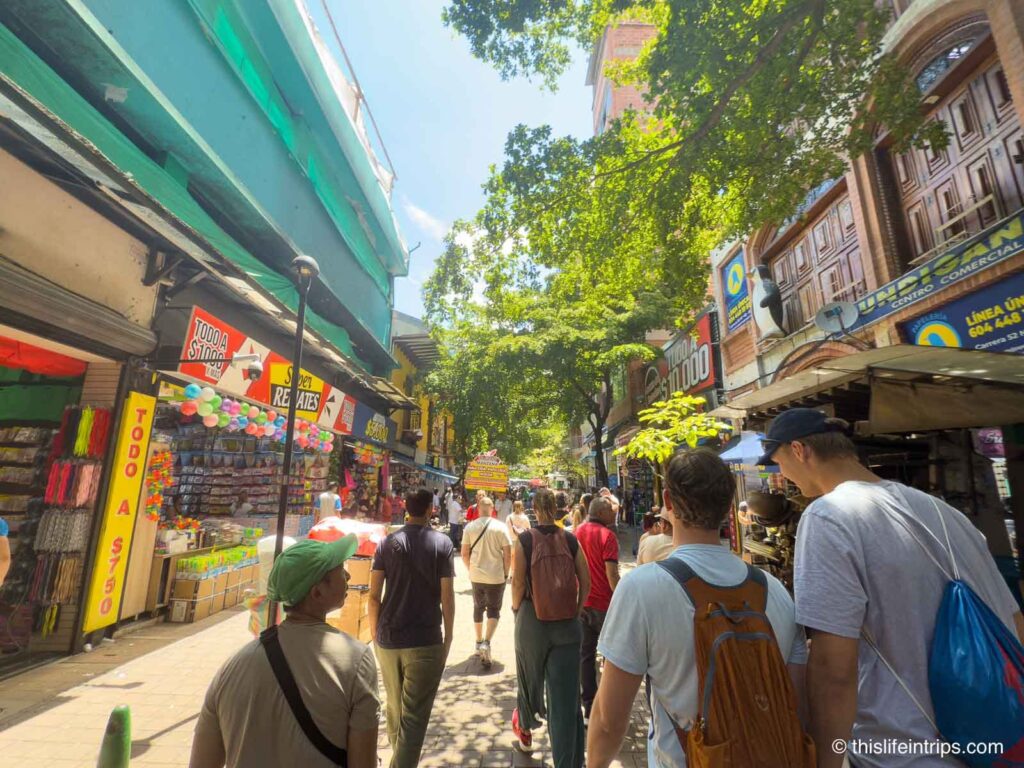
Julio is everything you hope for in a guide—charismatic, educated, and fiercely proud of his hometown. From the first moment, he made our Medellín walking tour feel personal, weaving humor into history and context into every street corner. His stories weren’t rehearsed; they felt lived in.
Alpujarra Administrative Center: The City’s Political Heart
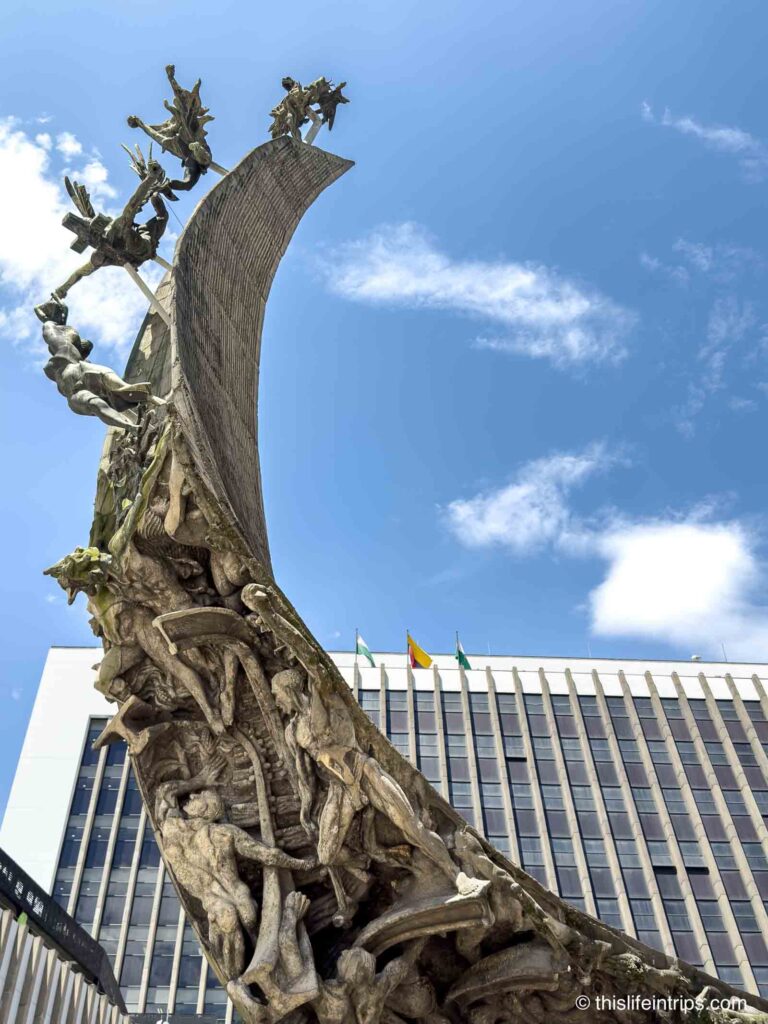
We began at the Alpujarra Administrative Center, a cluster of government buildings representing Medellín’s ambitions for a better future. Julio shared how the city transformed from being known as “the most dangerous city in the world” to a global example of urban innovation.
Watching people move through the plaza, it was clear how far Medellín has come.
Plaza Cisneros: Reinvention Through Light
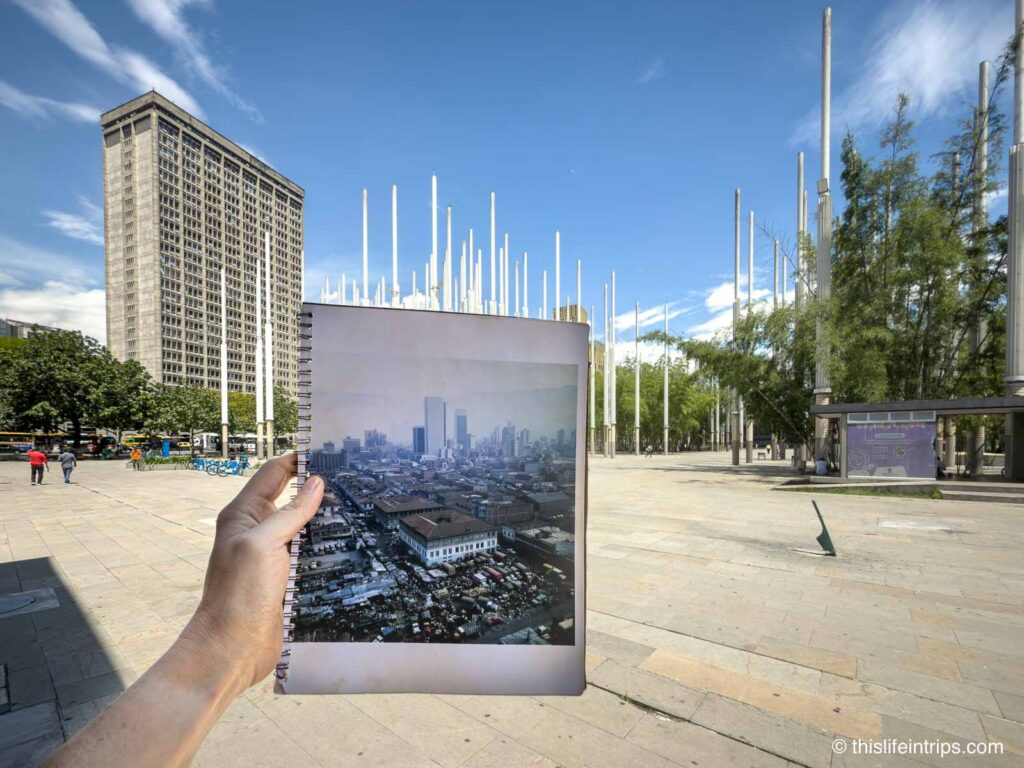
A short walk brought us to Plaza Cisneros—once a hotspot for crime, now completely reinvented. More than 300 illuminated light pillars rise from the ground, turning what used to be a seedy, unsafe area into a symbolic space of renewal. Medellín doesn’t hide its past; it transforms it.
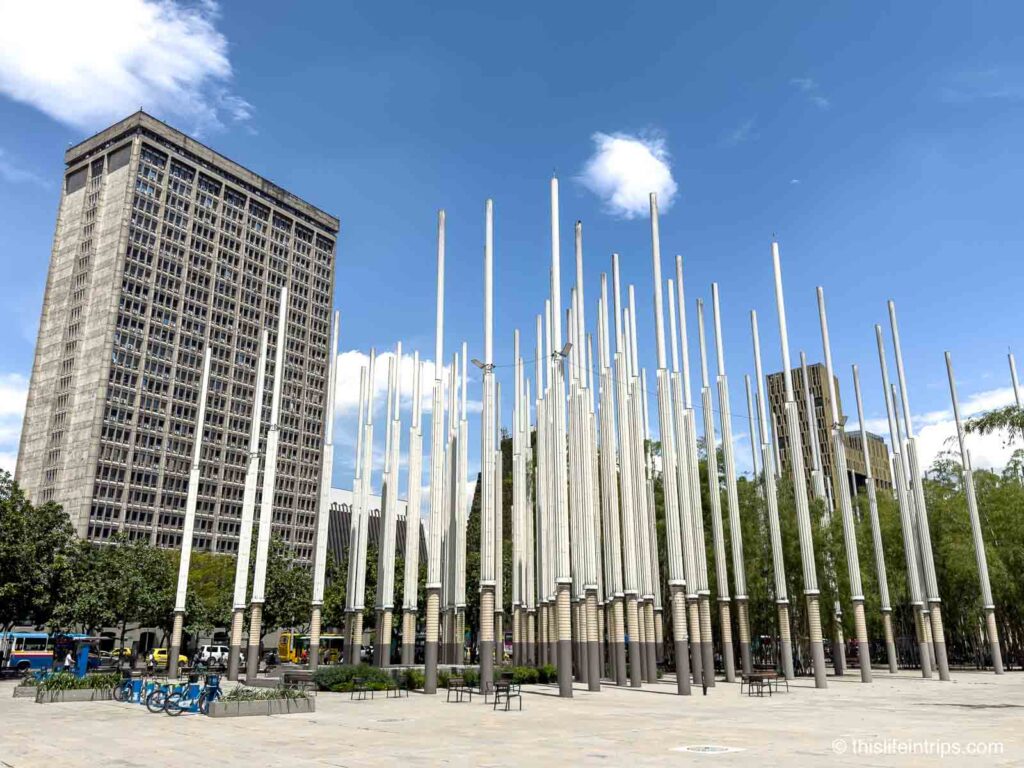
The Old Railway Station: Remnants of a Coffee Powerhouse
We paused outside the old railway station, a relic of the days when Medellín was connected by rail to the rest of the country. Julio used the moment to share how the region evolved into a global coffee leader—Colombia exports more than 11 million bags of coffee annually.
Hearing him talk about the country’s coffee heritage hit differently for me, since I had also taken a coffee farm tour earlier in the trip, a deep dive into the growing, harvesting, and tasting process that I highly recommend for anyone visiting.
Even though the trains no longer run here, their impact on Medellín’s coffee-driven rise is still unmistakable.
📌 Book Your Colombia Coffee Farm Tour Here
National Palace Mall: A Stunning Building With an Unexpected Twist
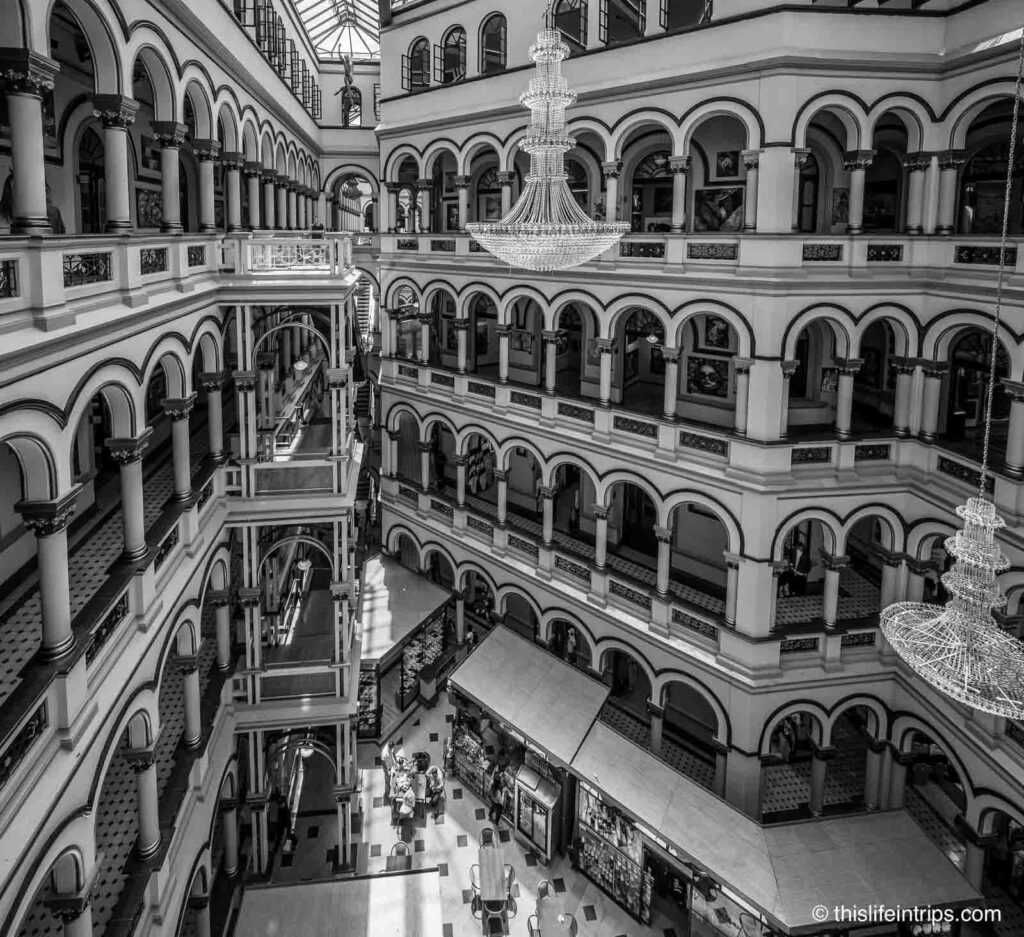
From there, we stepped inside the beautiful National Palace Mall—easily the most elegant shopping center full of knockoff goods I’ve ever seen. Originally built in the 1920s as the Palacio de Justicia, this grand neo-Romanesque building once housed Medellín’s judicial offices and government departments.
Its soaring arches, carved stone details, and dramatic central atrium were designed to showcase the city’s ambition and civic pride.
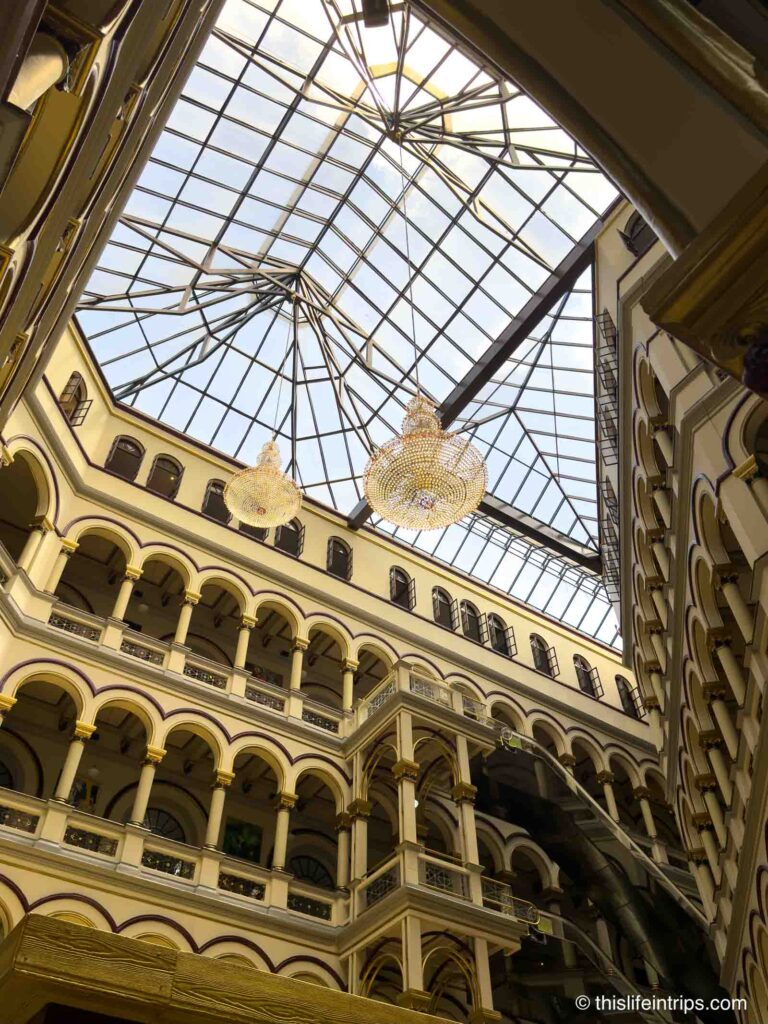
Today, that same architectural grandeur remains… even if the purpose has shifted dramatically.
Inside, the lower floors form a bustling maze of small stalls selling every imitation item imaginable—fake Nikes, “designer” bags, electronics, and endless trendy streetwear.
But the upper floors tell a very different story. After the economic downturn during the pandemic, and perhaps because there are only so many pairs of knockoff sneakers the market can support, many of the top levels have been converted into small art studios, galleries, and creative spaces.
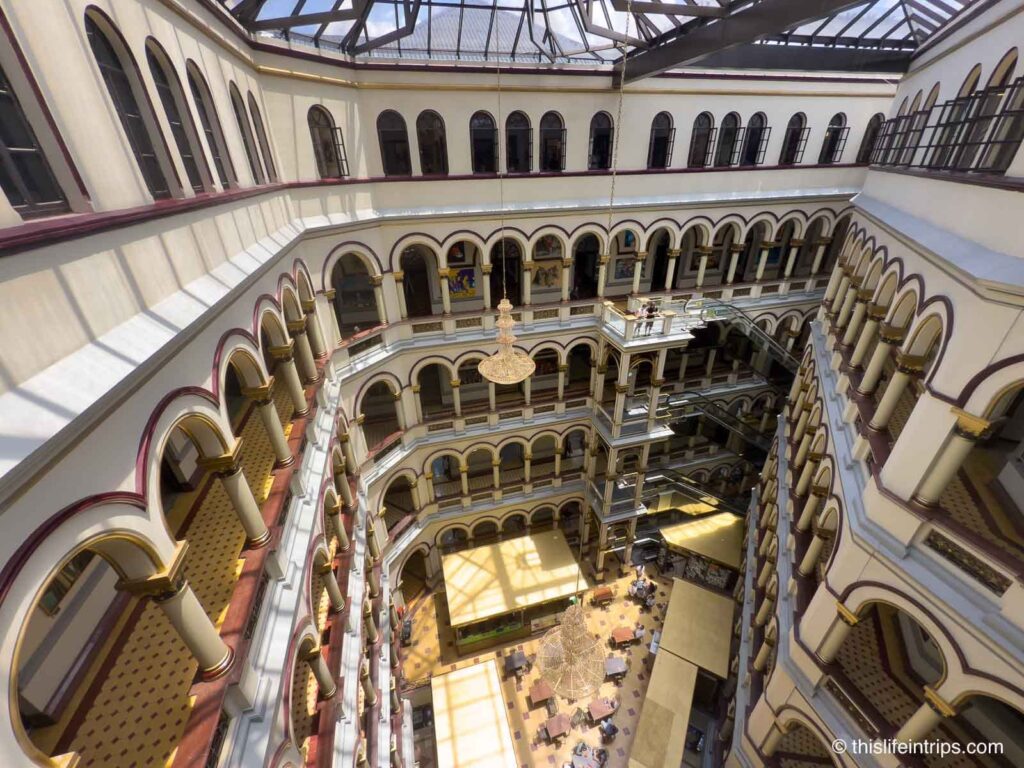
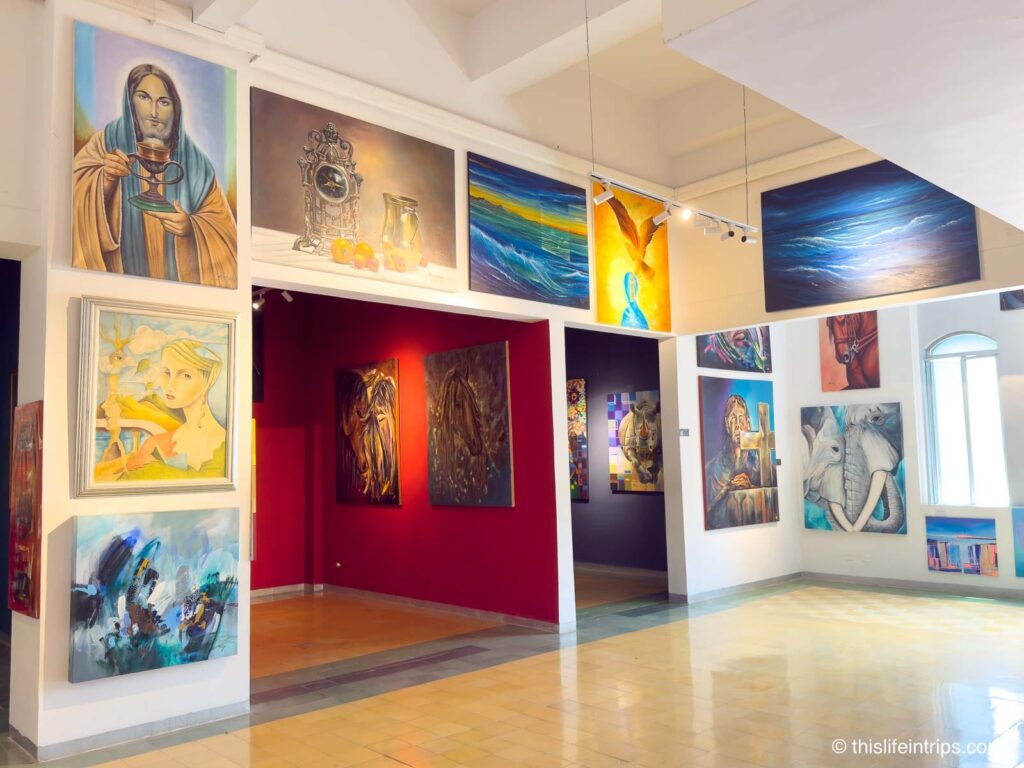
Julio gave us some free time to explore, and it turned out to be one of the more unexpected highlights of the day. Wandering through the mix of historic architecture, quirky shops, and emerging art made the building feel like a living blend of Medellín’s past and present.
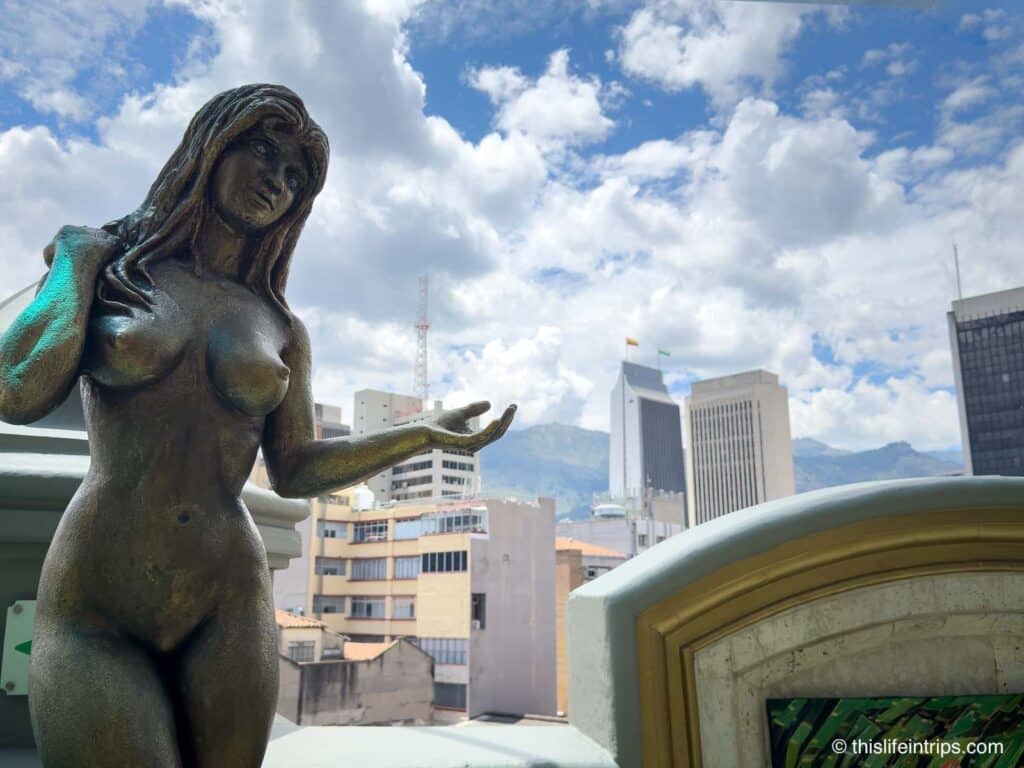
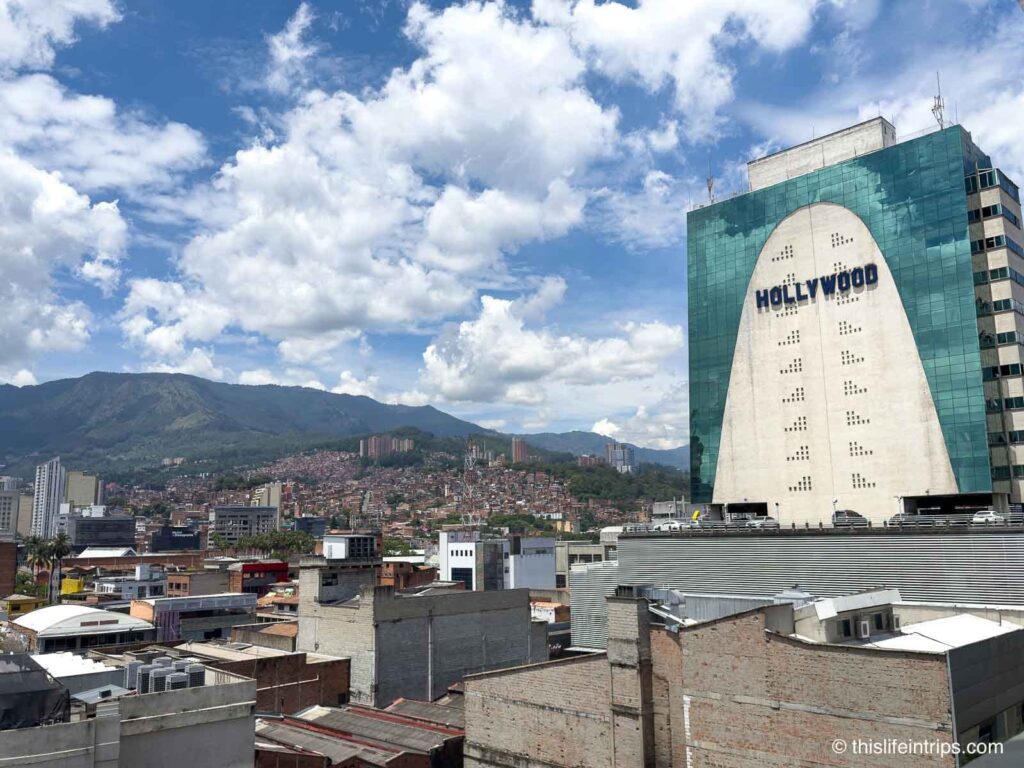
On the top floor, we discovered a small café with beautiful views of the city—a quiet spot to sip a coffee, admire the skyline, and appreciate how this once-formal government palace has reinvented itself into something entirely its own.
Veracruz Church: A Cultural Contradiction
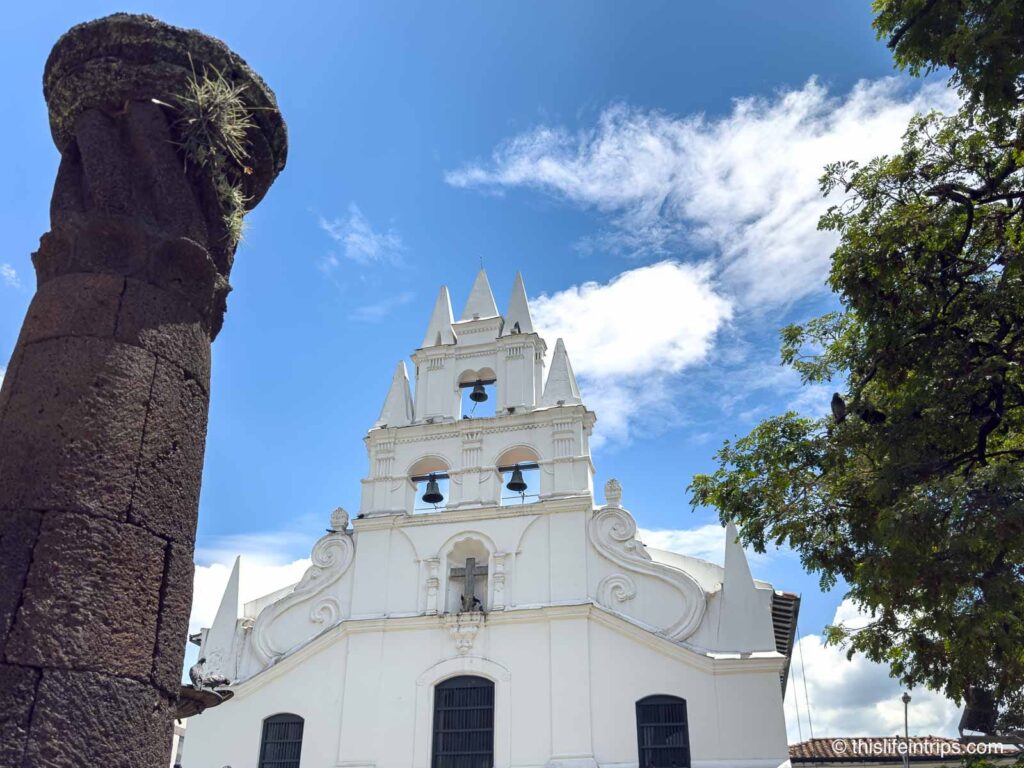
Veracruz Church appears to be a classic colonial church, but step outside and the scene shifts. Sex workers openly operate around its perimeter—a result of long-standing social and historical dynamics between the Church, the working class, and the city’s informal economy. Julio explained it with clarity and compassion, turning what feels like a contradiction into a meaningful cultural insight.
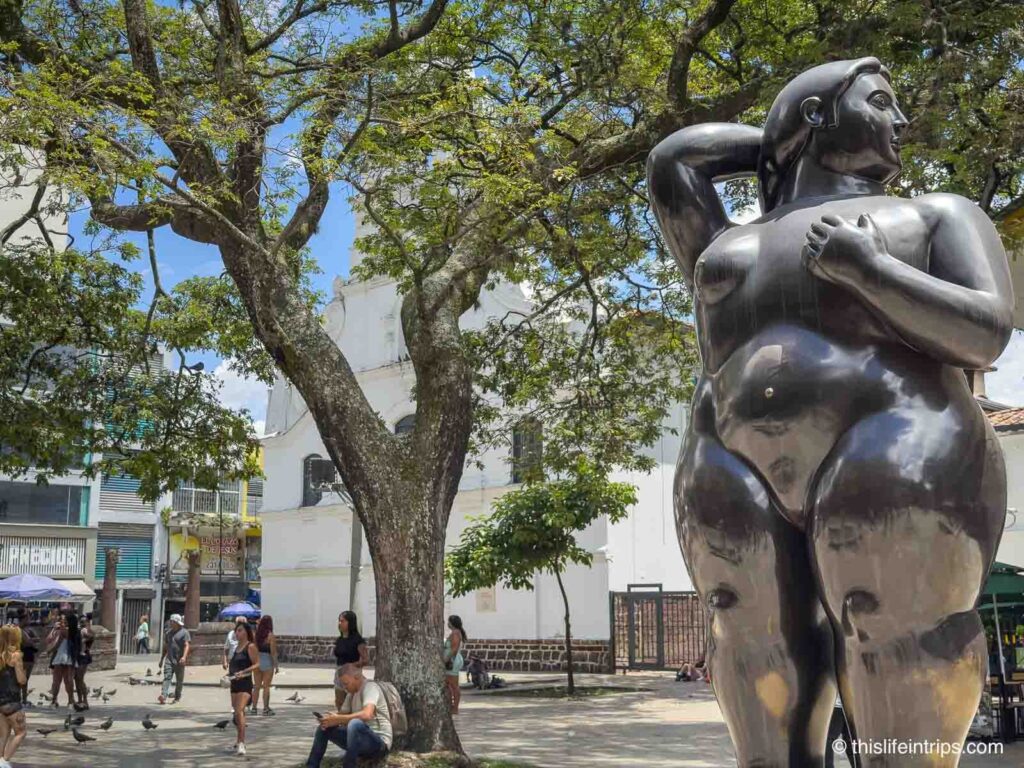
Plaza Botero: Medellín’s Curvy Icons
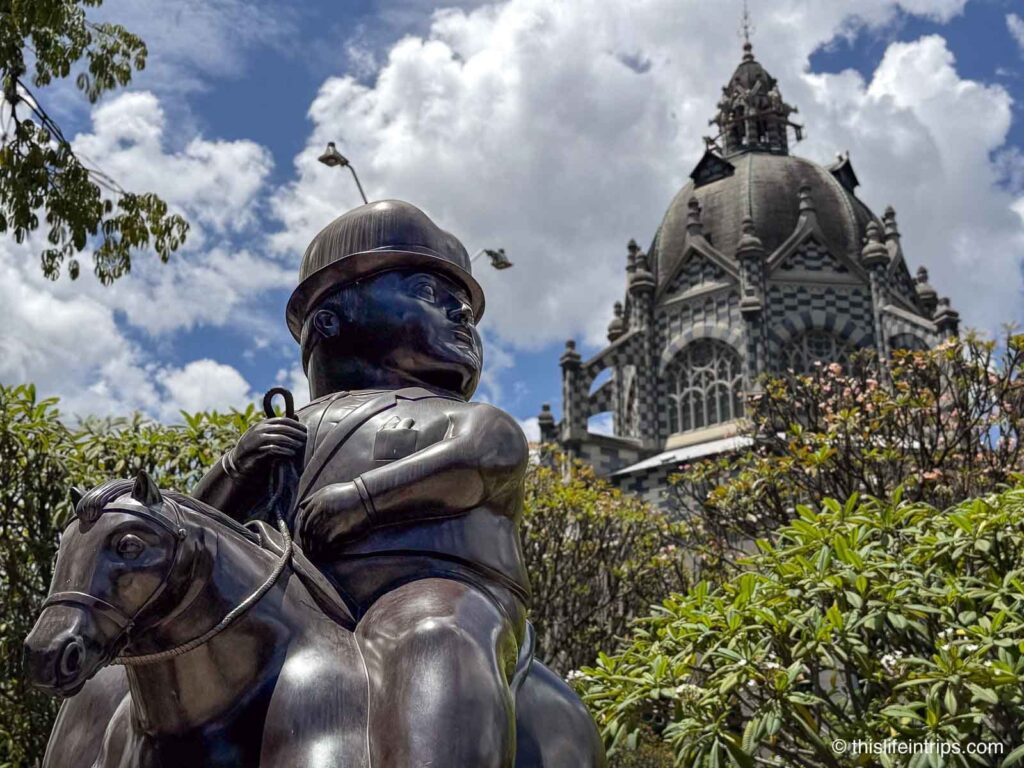
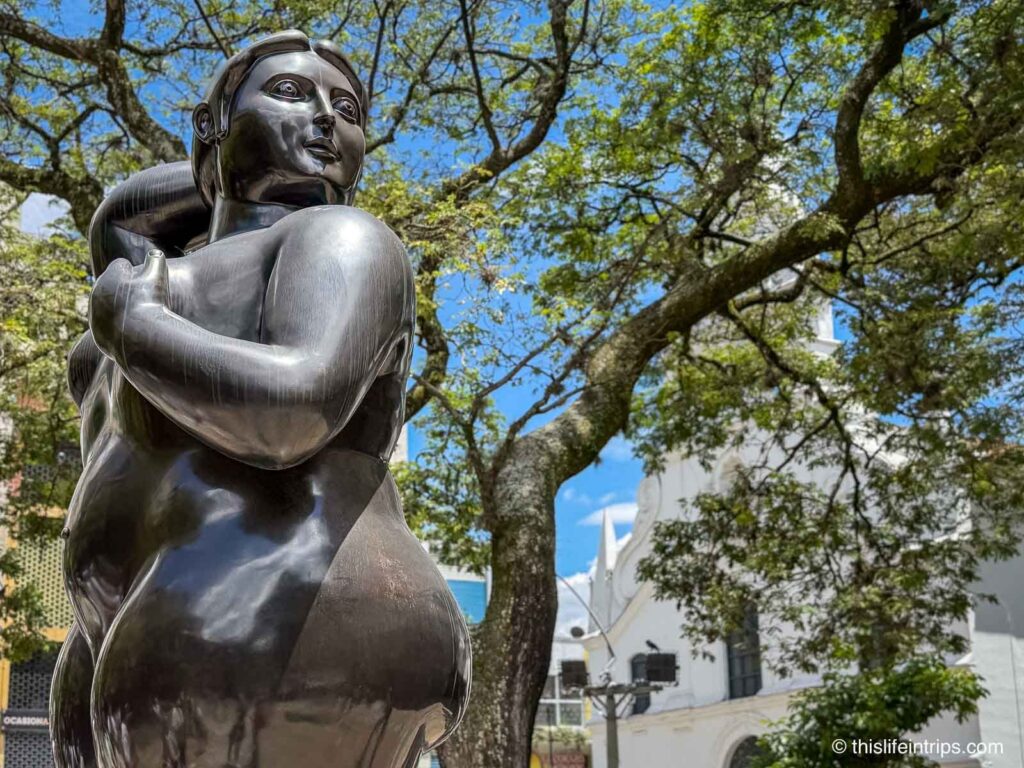
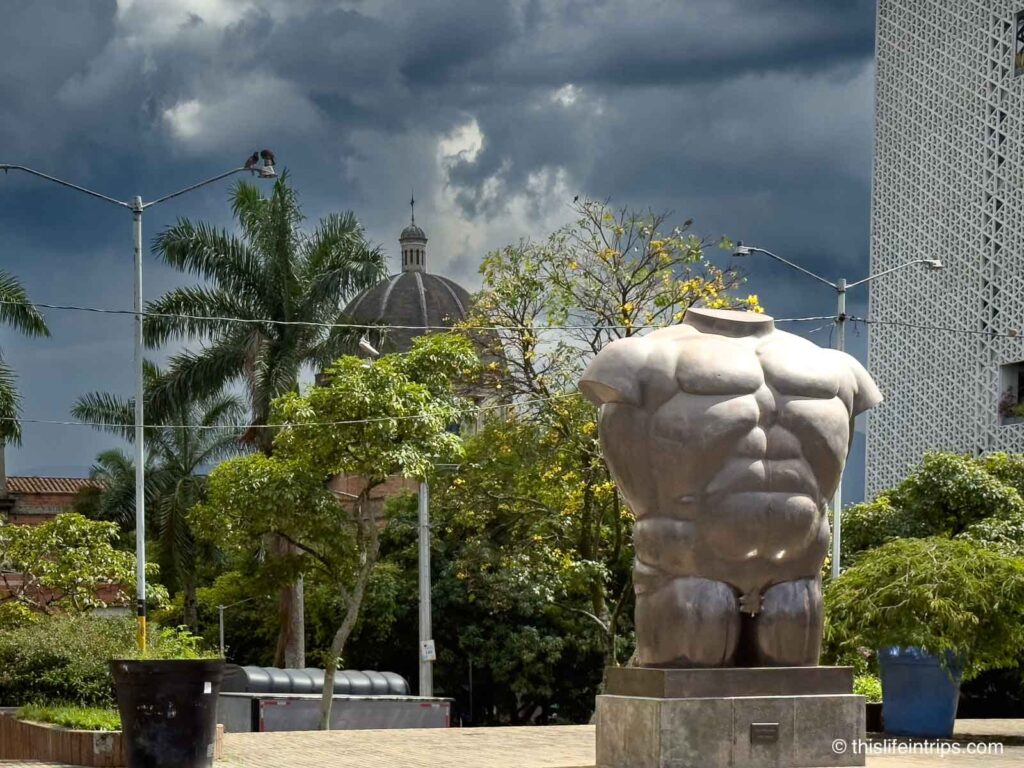
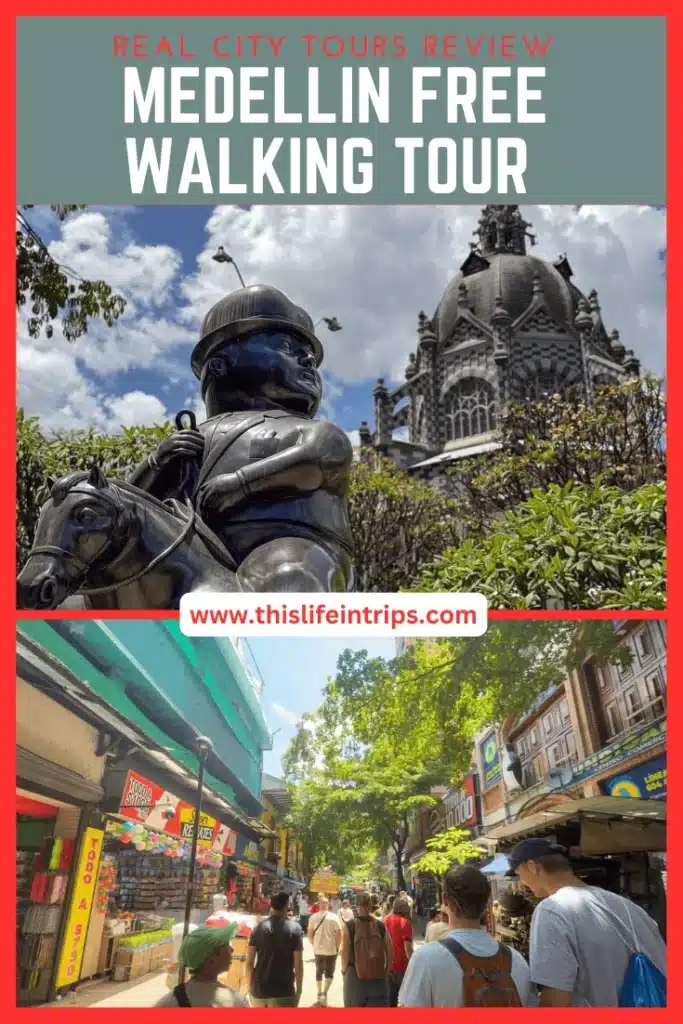
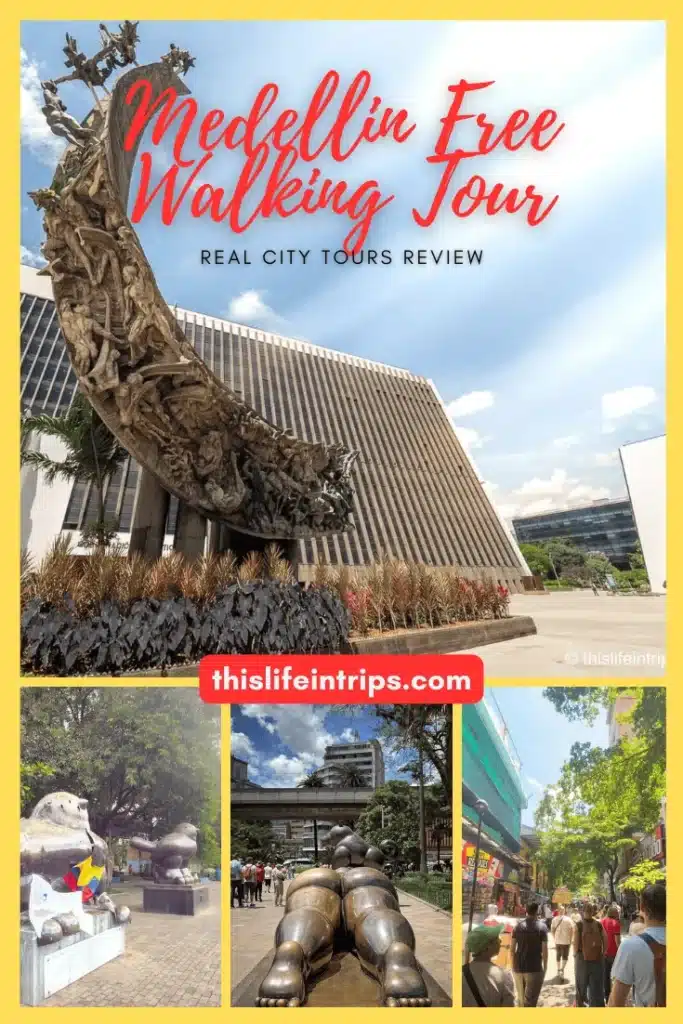
No Medellín tour is complete without a stop at Plaza Botero, home to Fernando Botero’s most famous and unmistakable sculptures. The square features more than 20 of his bronze masterpieces—massive, curvy, and intentionally exaggerated figures that have become synonymous with his “Boterismo” style.
From oversized cats and reclining women to playful soldiers and Roman heroes, each piece exaggerates volume to highlight sensuality, power, and satire all at once.
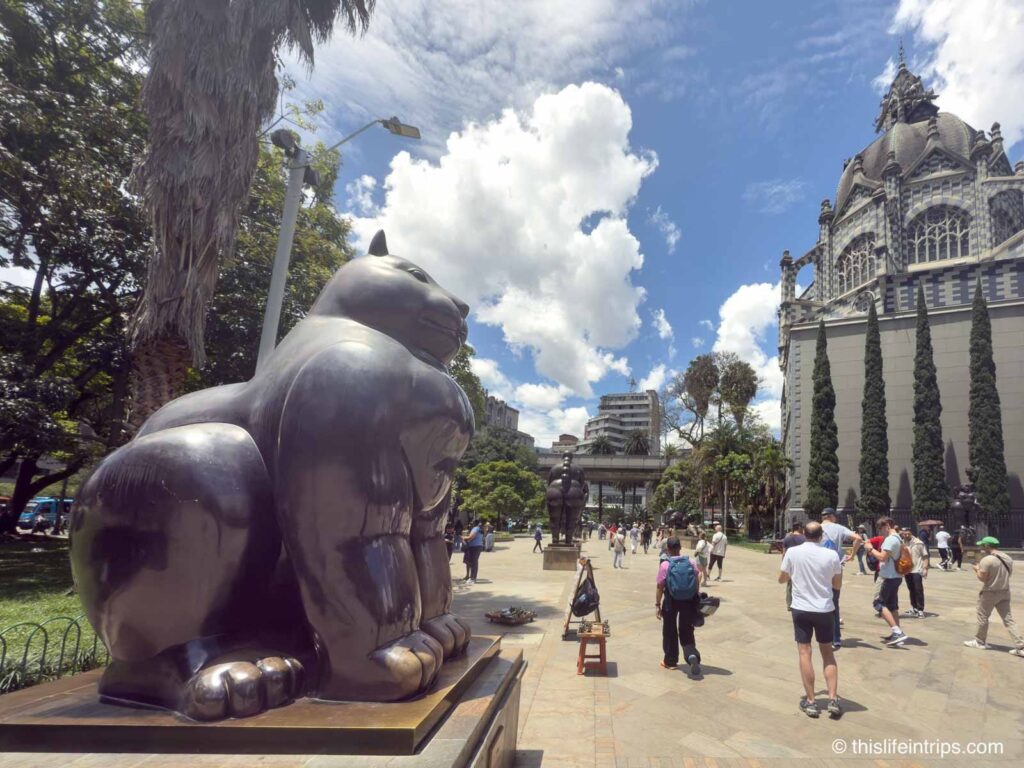
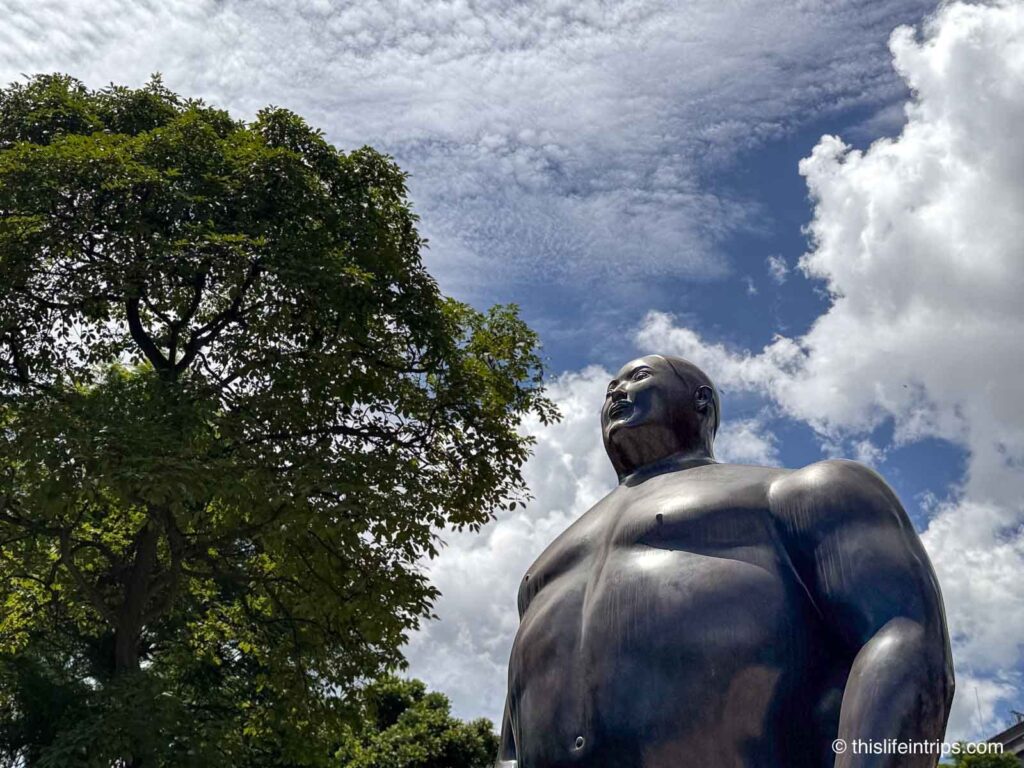
Up close, you notice details that photos never capture: the polished bronze worn smooth from thousands of hands, the surprising scale of each sculpture, and the way their rounded forms seem to absorb the light. The whole plaza becomes an open-air museum, alive with energy and humour.
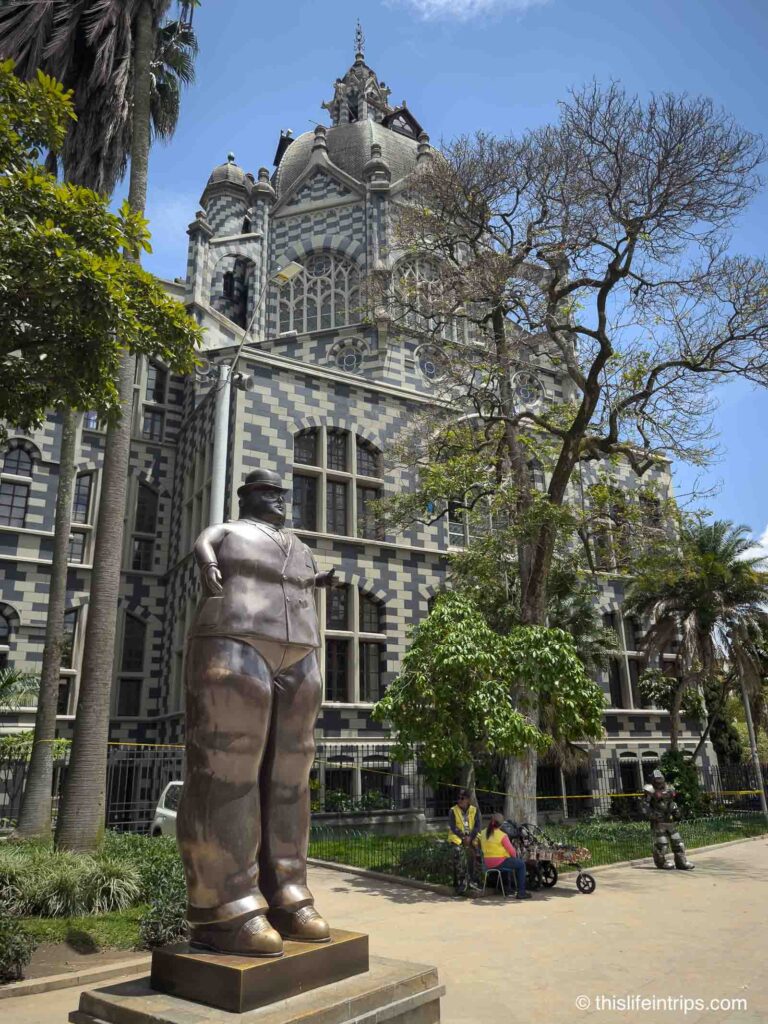
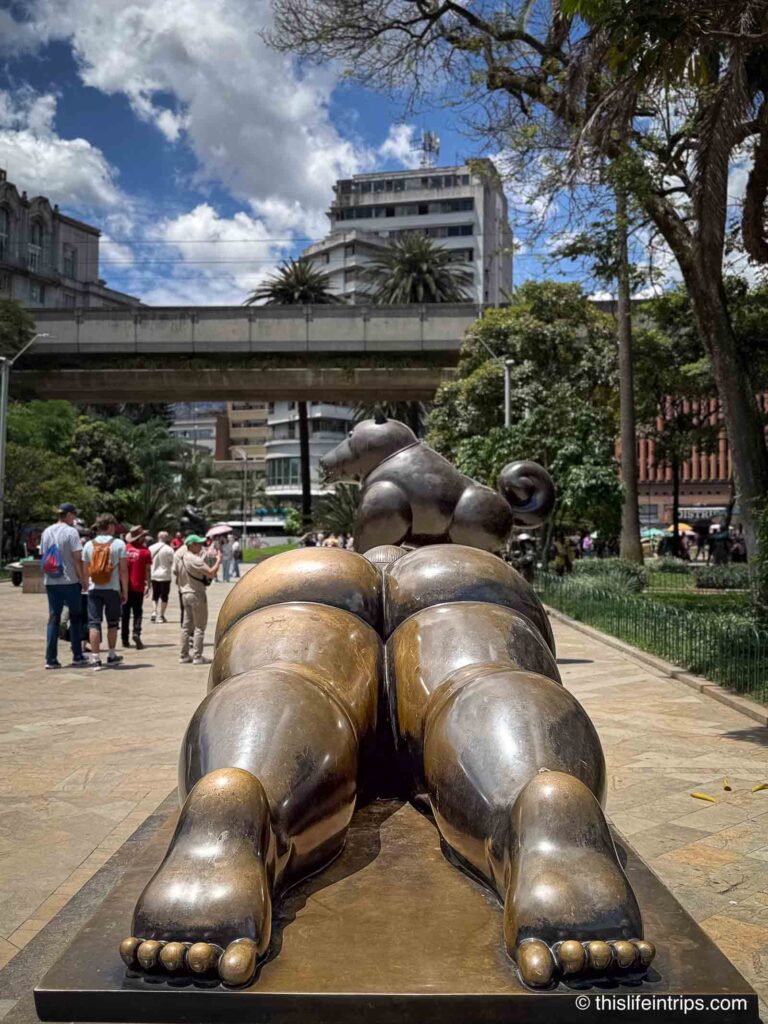
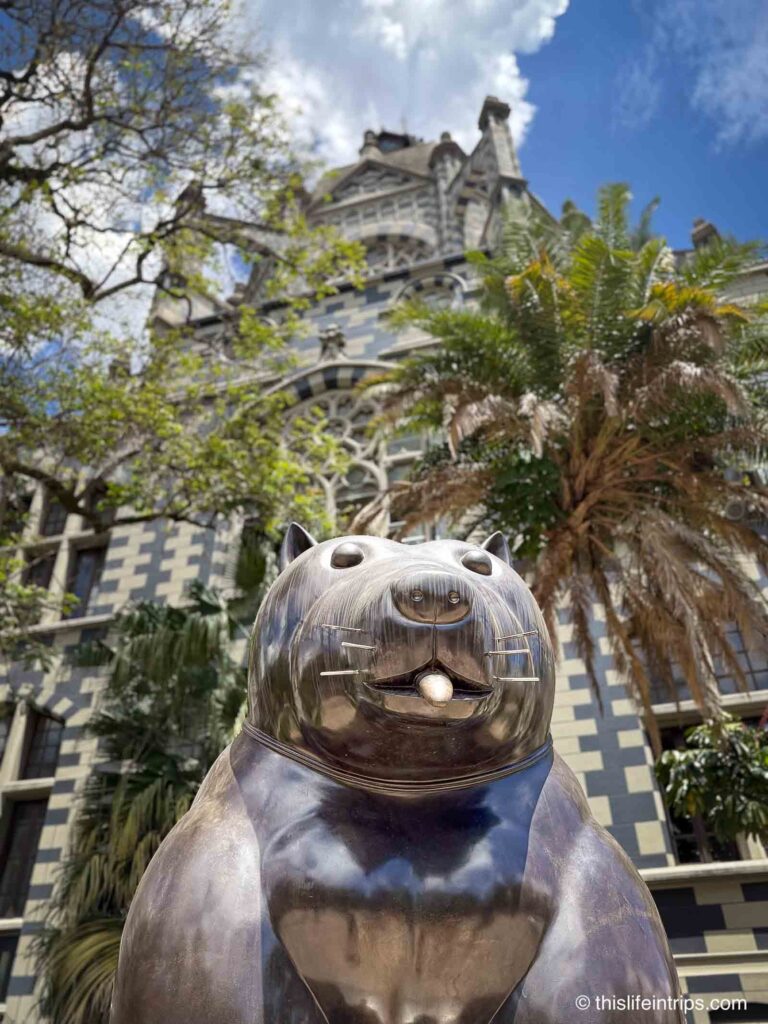
Juilo added his own commentary—let’s just say he had a few thoughts about Colombia’s appreciation for curves, and he wasn’t wrong. Botero’s art reflects a cultural pride in shape, personality, and joy, something that feels perfectly at home in Medellín’s vibrant heart.
Palacio de la Cultura: The Gothic Heart of Plaza Botero
Standing watch over Plaza Botero is one of Medellín’s most striking buildings: the Palacio de la Cultura Rafael Uribe Uribe. With its black-and-white checkered façade, neo-Gothic arches, and towering dome, it looks more like something you’d expect in Brussels than downtown Medellín.
Designed by Belgian architect Agustín Goovaerts in the 1920s, the palace was originally meant to serve as the seat of the Antioquia government—a bold architectural statement during a time when the city was rapidly expanding.
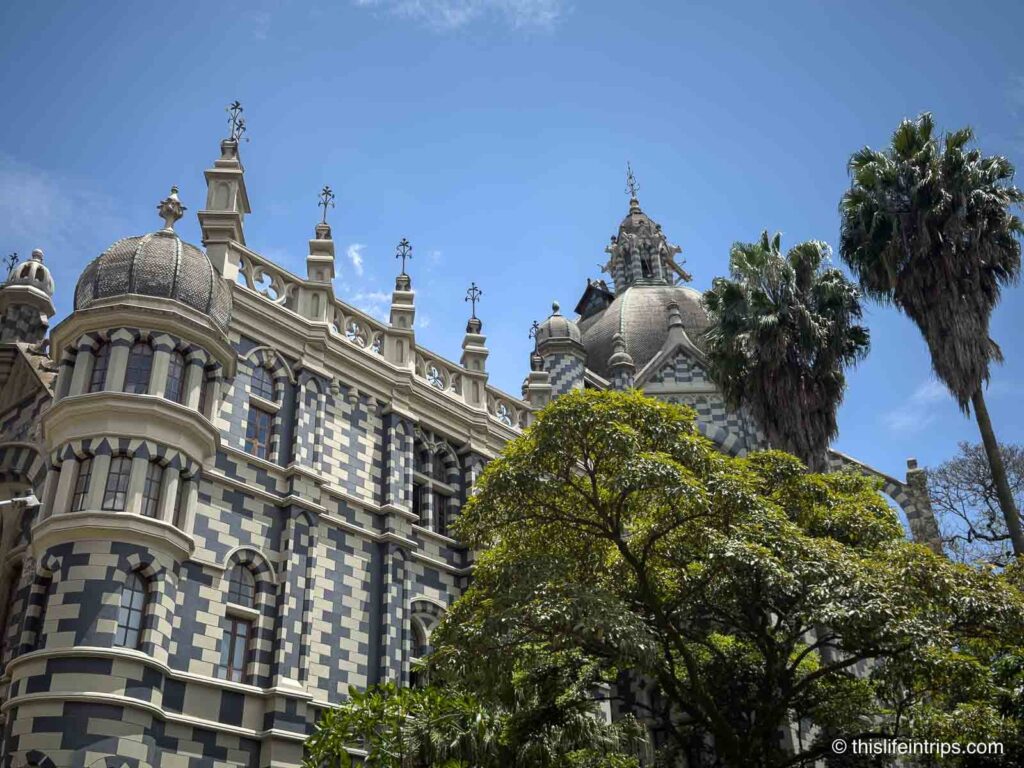
Although our tour didn’t take us inside, Julio did an excellent job explaining the building’s history and cultural importance, giving anyone who was curious enough context to return later and explore it on their own. Inside, the palace now serves as a cultural center, with art exhibits, historical displays, and open courtyards that reveal the ambitious scope of the original design.
San Antonio Plaza: A Bird That Remembers
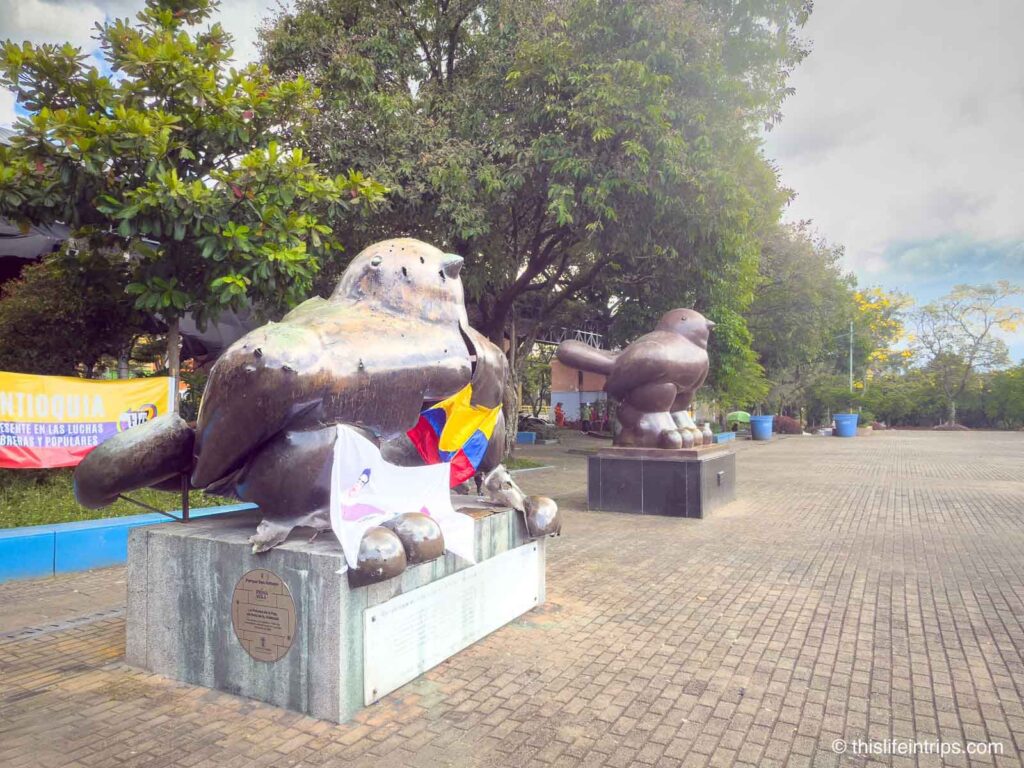
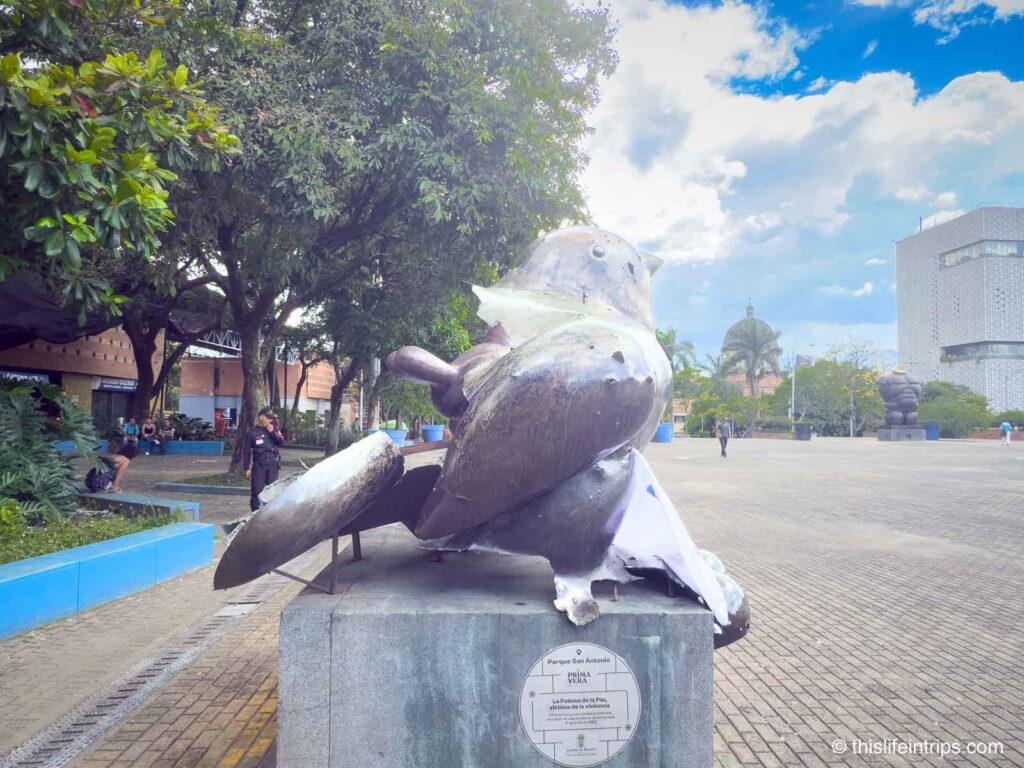
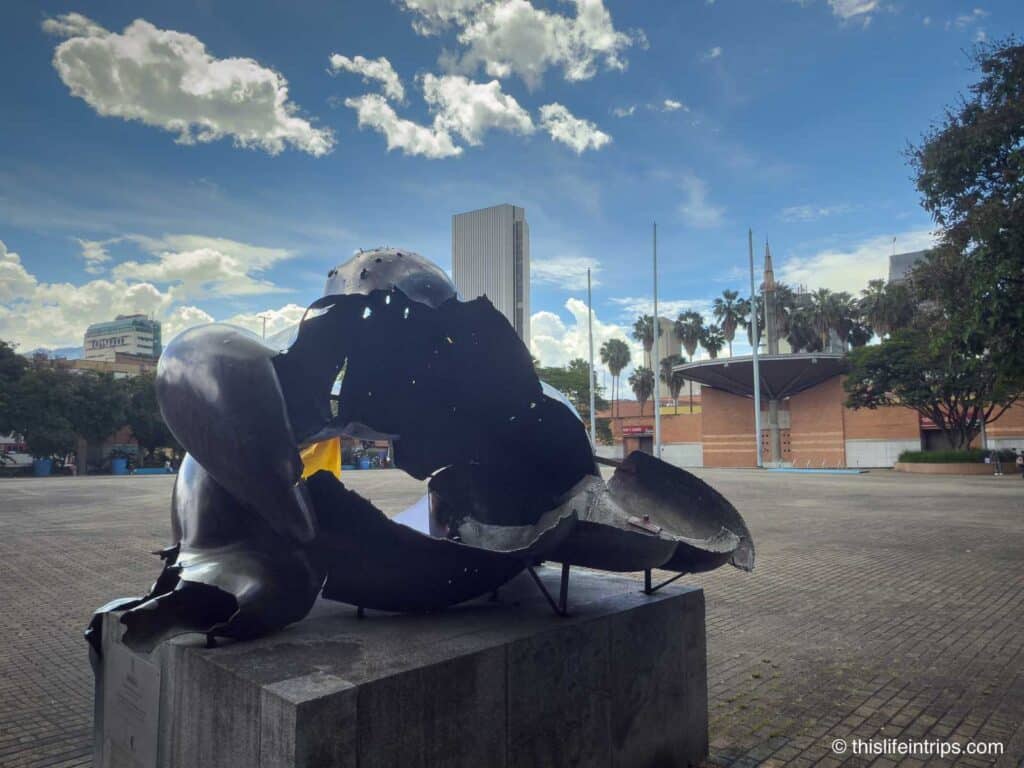
Our final stop was San Antonio Plaza, where a Botero bird sculpture was destroyed in a 1995 bombing that killed 23 people. Instead of removing the damaged sculpture, Botero donated a new bird and insisted the broken one remain as a memorial. Side by side, the two sculptures tell Medellín’s story: acknowledging its painful past while moving forward with dignity and resilience.
More Than a Tour Guide
What made this experience exceptional was Julio himself. So much so, we ended up hiring him for a private tour of Comuna 13 later that week (write-up coming soon!).
He was full of recommendations for restaurants, bars, and lesser-known sights. He even gave us pointers on taking a Medellin food tour and shared his take on Medellín’s legendary salsa nightlife.
Why You Should Take a Medellin Free Walking Tour
If you’re visiting for a few days or even spending one week in Medellín, the Real City Medellin free walking tour should be your first activity. It’s safe, informative, and super entertaining. You’ll get to explore areas like Centro that you might otherwise avoid, and learn the truth about a city that’s far more than its past headlines.
You’ll also spot plenty of places worth revisiting, from unique coffee shops and hole-in-the-wall bars to hidden art galleries tucked between busy streets. Tours like this are great for building out the rest of your Medellín itinerary—I even went back to try a couple of restaurants Julio mentioned, some of the best spots in the city that never show up on food blogs.
This kind of local insight also helps you pick your next experiences, whether that’s a Colombian cooking class at a local’s home, a street food tour through Medellín’s busiest districts, or even a full-day trip to colorful Guatapé. It’s the perfect way to turn one walking tour into a deeper dive into everything the region has to offer.
📌 Book Your Medellín Free Walking Tour Here
Where to Stay and Relax After Your Medellin City Tour
When choosing where to stay in Medellín, El Poblado is hard to beat. It’s safe, walkable, and packed with cafés, leafy streets, and fantastic dining—making it the perfect home base after a long day exploring the city on foot.
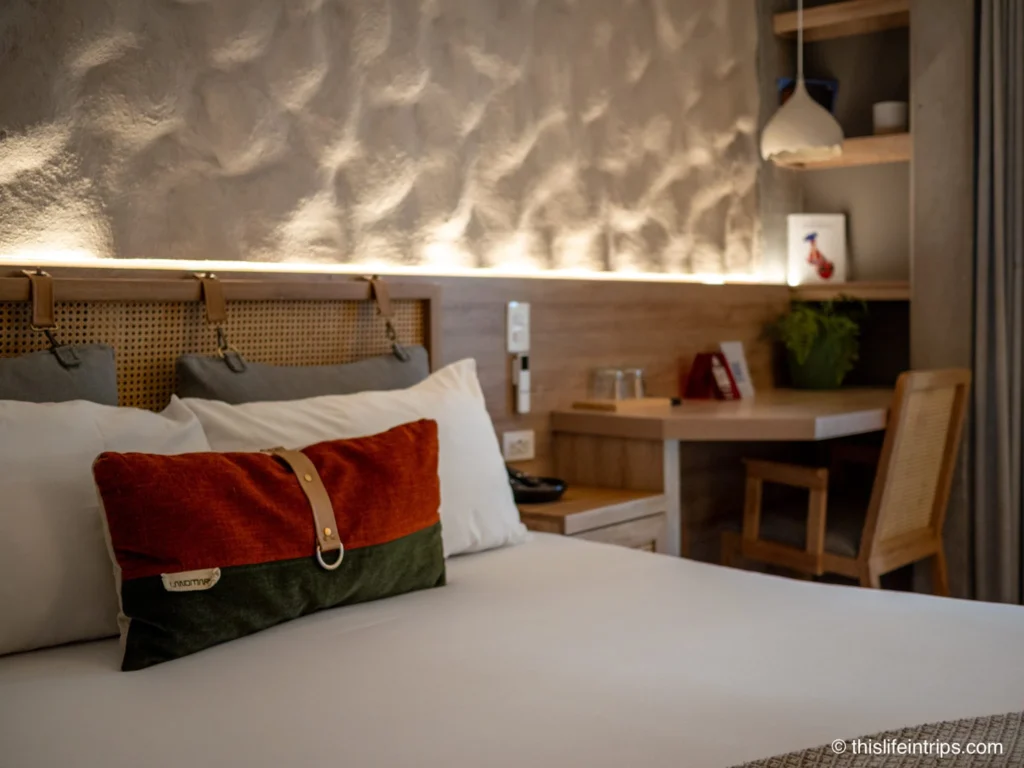
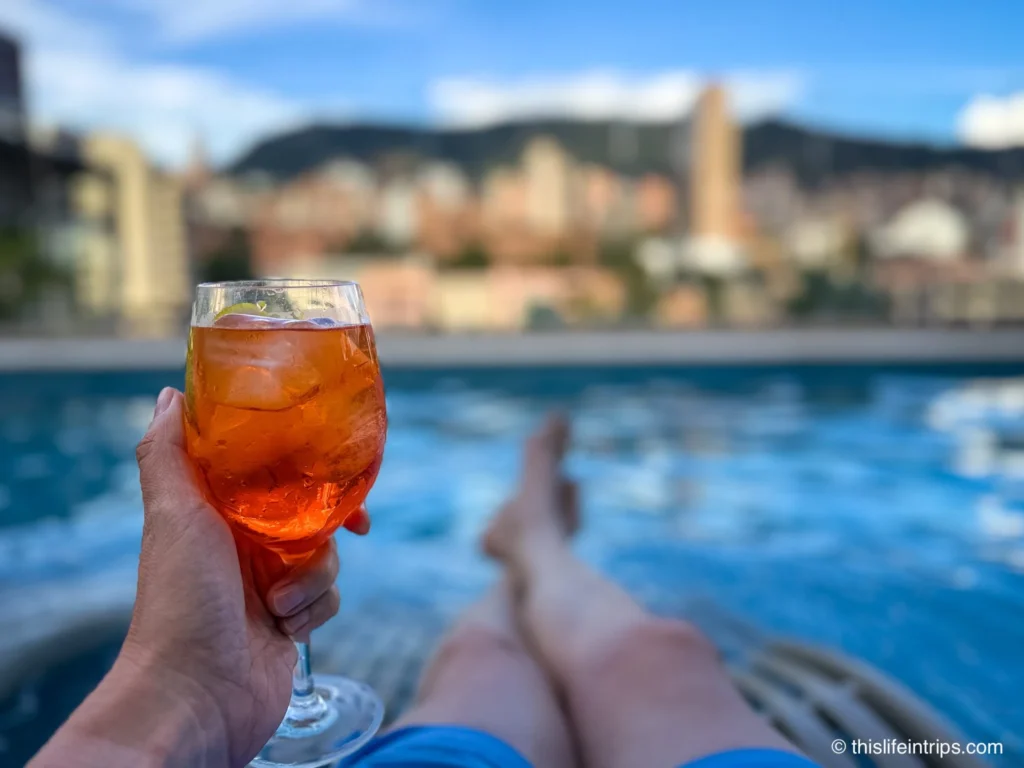
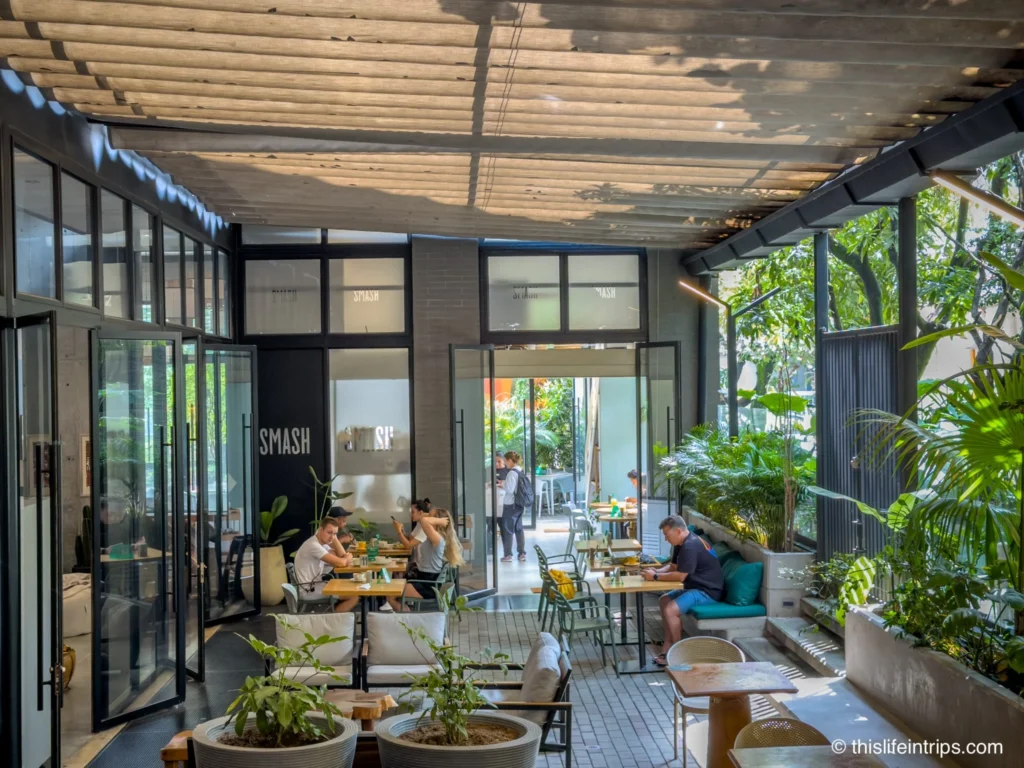
My top recommendation is The Landmark Hotel, thanks to its prime location within walking distance of Provenza, Parque Lleras, and many of the city’s best restaurants.
After hours on a walking tour, there’s nothing better than returning to its rooftop pool, relaxing common areas, and stylish modern rooms. The mix of comfort, convenience, and amenities makes it an ideal place to recharge between adventures.
You can read my full review here: Landmark Hotel Medellín. If you are looking for a great Medellin Airport hotel, check out the Reserva Sajonia Soy Local and the SALAS VIP Lounge on your way out of town!
FAQ: Medellin Free Walking Tour
Is the tour really free?
Yes, the tour is free to join. At the end, you’re encouraged to tip your guide what you feel the tour was worth. Cash in Colombian pesos is preferred.
How long is the Medellin walking tour?
Roughly 3.5 to 4 hours, mostly flat walking. Wear comfortable shoes and bring water.
Is it safe to visit Medellín Centro?
With a local guide and group, yes. The tour avoids unsafe areas and you’ll get safety tips along the way.
Can I bring kids on the tour?
Yes, though the subject matter can be heavy. There are references to drug violence and prostitution.
How do I book the Real City Tour?
You must book in advance through their official website. Tours fill up fast!
What say you?
Thoughts on this Free Medellin Walking Tour review?
Let’s hear it!
Looking for more travel reviews?